Bare-Root Season in the UK: What Growers List and When
From November to March British nurseries lift deciduous trees, hedging, roses and fruit from open ground and sell them bare-root at a fraction of the container price. This page explains what is sold this way, the height, girth and transplant codes on a list, how the season runs and how the plants are handled.
Updated 23 October 2026. Grower totals from the live uk.hortosapp.com county pages on 23 October 2026; this page quotes no HortOS price figure, because growers are still adding their lists.
On this page
For five months of the year the cheapest way to buy a tree, a hedge or an orchard in the United Kingdom is without a pot. From the first frosts of November to the swelling buds of March, nurseries lift deciduous trees, hedging plants, roses and fruit from open fields and sell them bare-root, in bundles, at a fraction of the price of the same plant grown on in a container. The season is short, the plants do not keep, and the order books open in September. Groups and councils that understand the calendar plant more for the same money.
This page sets out what British growers sell bare-root and when, the size codes and grades on a bare-root list, how availability changes through the season, how the plants are handled between the field and the ground, and where the growers are. It draws on HortOS, a free directory of wholesale plant growers in the United Kingdom, listed by county, to which each grower adds its own availability and trade prices, and on what the Royal Horticultural Society, the plant health authorities and the hedgerow bodies publish. It quotes no HortOS price figure, because growers are still adding their lists to the UK site.
Quick facts
| The season | Bare-root deciduous trees, shrubs, hedging and roses are lifted and sold while dormant, from about November to March. The Royal Horticultural Society says they appear towards the end of October for planting from November to March. |
|---|---|
| What is sold this way | Native hedging and woodland transplants, beech and hornbeam hedging, fruit trees and bushes, roses, ornamental and street trees up to a large girth, and some perennials and strawberry runners. |
| What is not | Evergreens, which move rootballed or in containers; most perennials and shrubs, which are container grown; anything in leaf. |
| The codes | Whips by height, 40/60, 60/80 and 80/100 centimetres; transplants by their nursery history, 1+1 or 1u1; trees by stem girth in centimetres. |
| Ordering | Lists open in late summer; the popular lines are reserved by October; the first lifts follow leaf fall; the last lifts are in March; late orders are filled from what remains. |
| Handling | Roots must never dry. Plants are kept in their bags in the shade, heeled in if planting waits, soaked before planting, and in the ground within days of delivery. |
What the bare-root trade sells
Bare-root is a method, not a kind of plant. A nursery sows or strikes a crop in open ground, grows it for one to four years, and lifts it in winter when it is leafless and dormant. The soil is shaken from the roots, the plants are graded by height or girth, tied in bundles and stored cold until they are sold. No pot, no compost, no watering through a summer: that is why the price is low. Native hedging transplants, the hawthorn, blackthorn, hazel, field maple and dog rose of a farm or school boundary, are the bulk of the trade by number. Beech, hornbeam and privet for garden hedges, fruit trees on named rootstocks, bush and cane fruit, roses, and ornamental and street trees from light whips to heavy standards all move the same way.
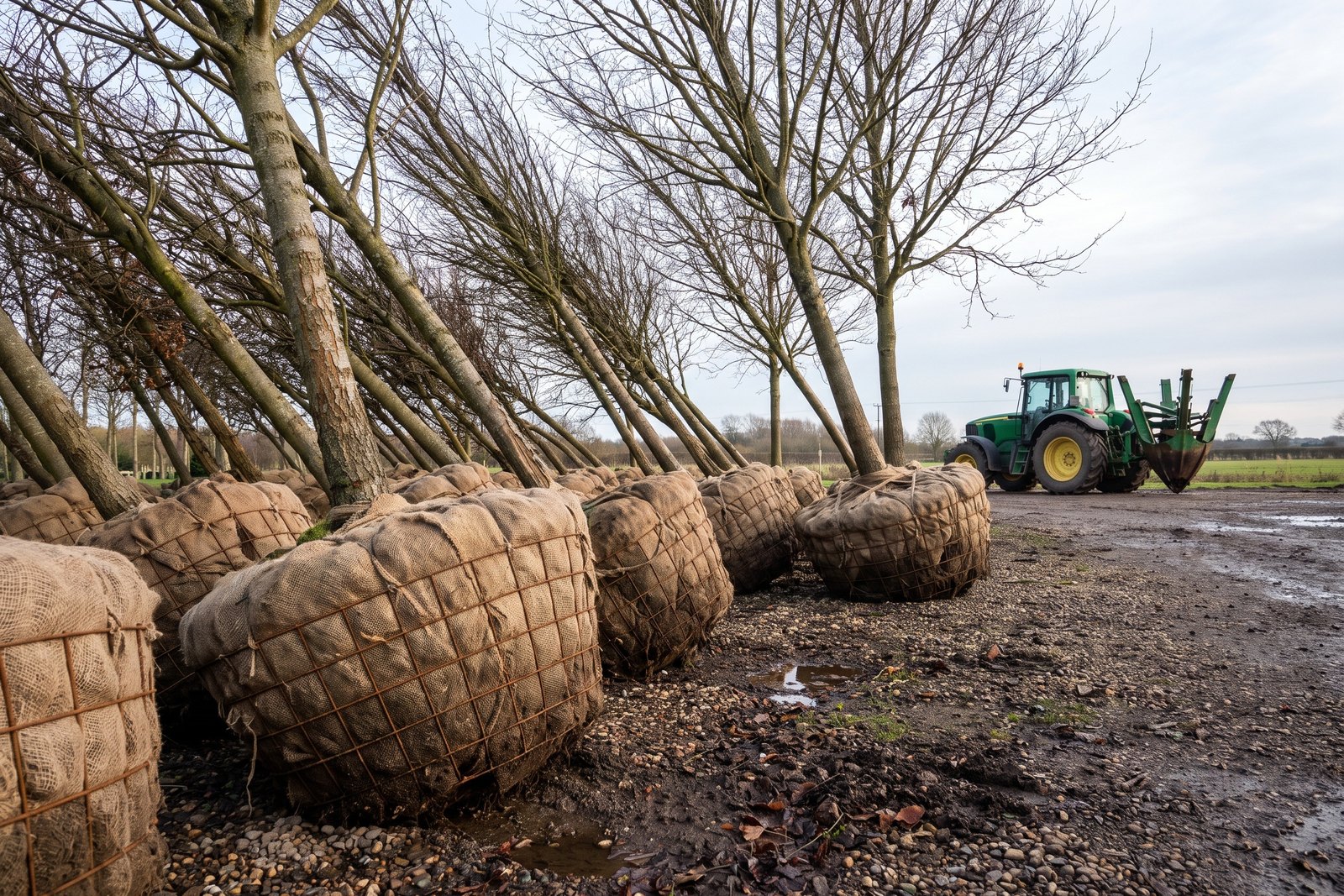
Evergreens do not. Yew, holly, laurel, box and conifers keep their leaves and lose water all winter, so they are lifted with a ball of soil wrapped in hessian and wire, or grown in containers. Perennials are nearly all container grown now, although a few nurseries still sell bare-root crowns of peonies, hostas and rhubarb, and strawberries as runners. A plant in leaf is never sold bare-root.

The codes on a bare-root list
Whips and hedging plants are sold by height in centimetres, written as a band: 40/60, 60/80, 80/100, 100/125. Taller is dearer and slower to establish; for a hedge, the 40/60 and 60/80 grades are the usual choice. Transplants from forestry and hedging nurseries also carry a code for their history. A 1+1 was grown for a year in a seedbed and a year in a transplant line; a 1u1 was undercut rather than moved; a 2+0 spent two years in the seedbed. The codes tell a buyer how fibrous the root system is likely to be.
| Code or grade | What it means | Used for |
|---|---|---|
| 40/60, 60/80, 80/100 | Height band in centimetres | Hedging whips, woodland and shelter planting |
| 1+1, 1u1, 2+0 | Years in the seedbed, then transplanted or undercut | Native transplants from forestry and hedging nurseries |
| Feathered, 125/150 to 200/250 | A young tree with side branches to the ground, by height | Woodland edges, screens, trees to be trained |
| Standard, 8 to 10 cm | A clear stem of about 1.8 metres, girth measured at 1 metre | Parks, streets and avenues; the smallest common street tree |
| Heavy standard, 12 to 14 cm | A larger tree of the same form | Where a tree must be seen at once and can be watered |
| Maiden, 1 year | A one year old grafted fruit tree, unbranched | Orchards and trained fruit, formed by the grower's own pruning |
Fruit trees add the rootstock to the code, because the rootstock sets the mature size. A nursery lists an apple as a maiden or a two year bush on a named stock, and the catalogue says what height each stock reaches. Plant sourcing for allotment and community garden groups covers the fruit trade.
How the season runs
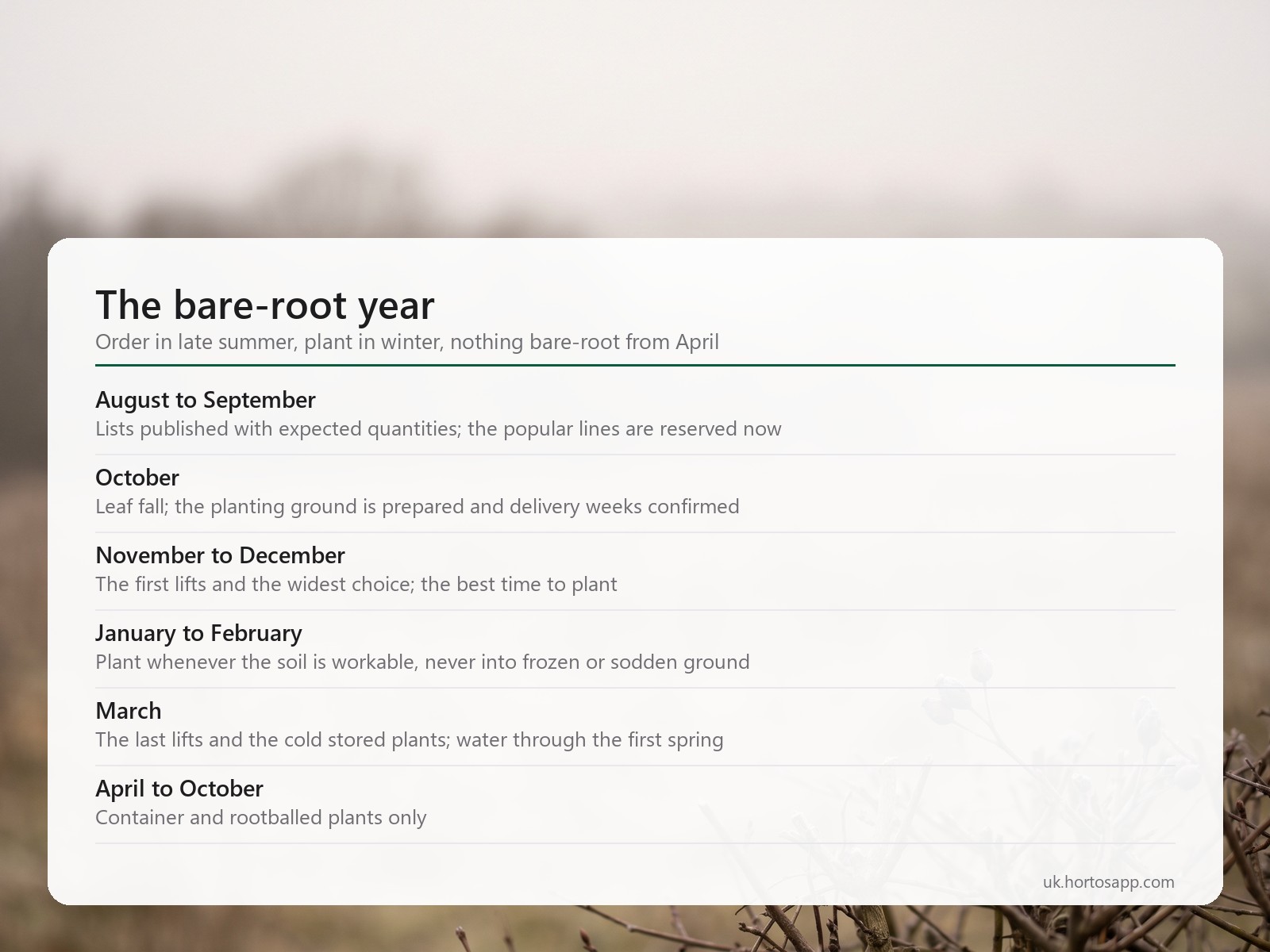
The order books open before the plants are lifted. Hedging and tree nurseries publish their bare-root lists in late summer with the quantities they expect to lift, and the popular lines, native mixes in the common grades, heavy standards of the fashionable street trees, the best known apple varieties, are reserved by October. Lifting starts after leaf fall, usually in November, and continues through the winter whenever the ground is neither frozen nor waterlogged. Plants lifted early are held in cold stores so that orders can be despatched through a hard spell.
| Month | On the nursery | For the buyer |
|---|---|---|
| August to September | Lists published with expected quantities | Order now for the lines that sell out |
| October | Leaf fall; ground prepared for lifting | Prepare the planting ground; confirm delivery weeks |
| November to December | First lifts; despatch begins | The best time to plant; the widest choice |
| January to February | Lifting and despatch continue, weather allowing | Plant whenever the soil is workable; avoid frozen or sodden ground |
| March | Last lifts; cold stored plants cleared | Late planting possible; water through the first spring |
| April to October | No bare-root sales | Container and rootballed plants only |
Availability moves through the season in one direction. A grade that is plentiful in November is short by February, and a nursery that has sold its 60/80 beech will offer 80/100 at a higher price or 40/60 at a lower one. A buyer who must plant in March takes what is left, which is why the trade orders in autumn and plants in winter.
Handling between the field and the ground
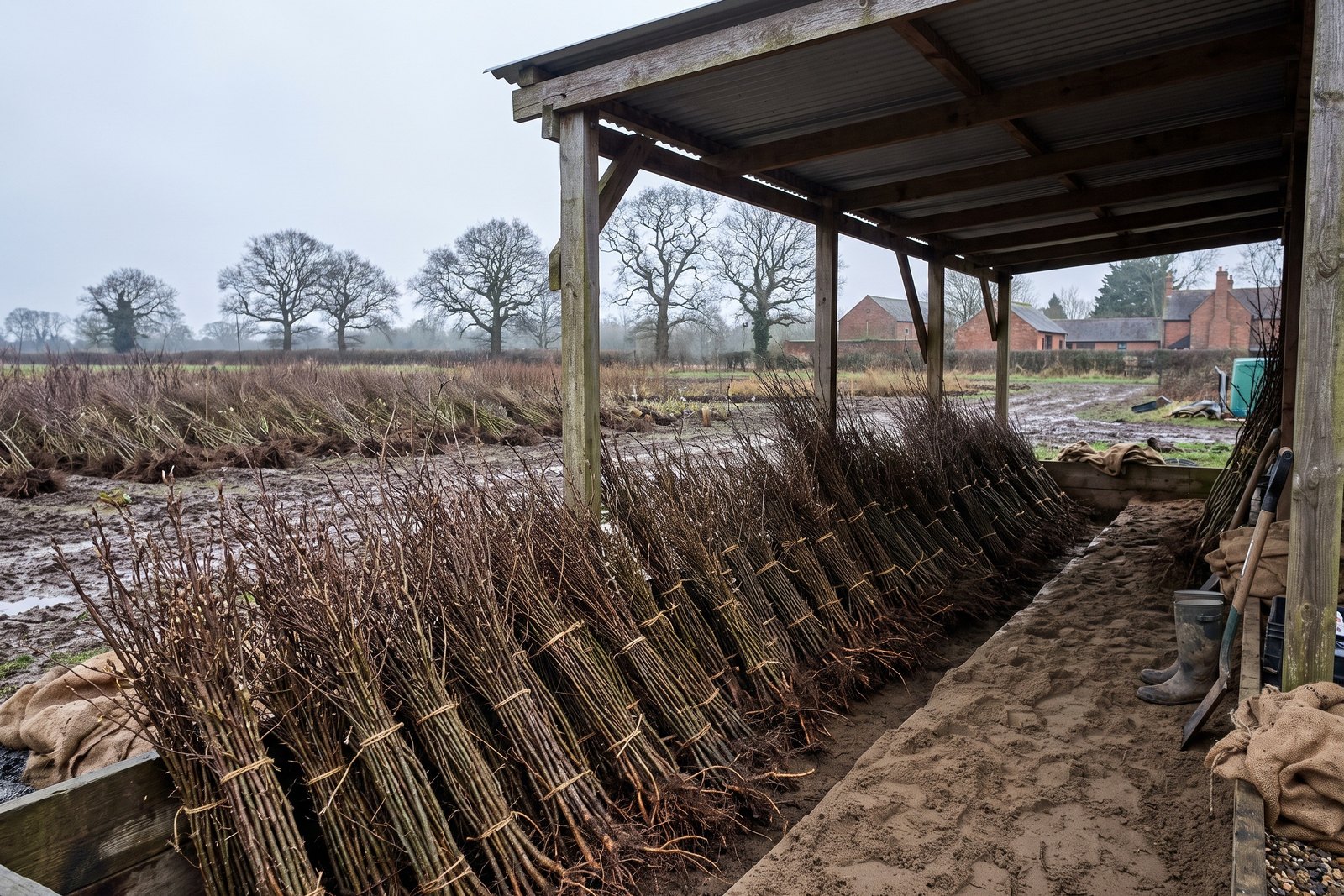
Bare-root plants survive their journey because they are dormant and because their roots are kept damp and dark. Everything about handling them follows from that. They arrive in bags or bales, roots inward, and should stay closed in a cool shed or on the shaded side of a building until the planting day. If planting is more than a day or two away, the bundles are heeled in: laid in a trench at an angle, roots covered with soil or sand and firmed, so that each plant can be lifted again without damage. Before planting, roots are soaked for an hour and any broken ones cut back cleanly.
Planting follows the Royal Horticultural Society's advice for hedges: a trench or a slit, the plant set at the depth it grew at in the nursery, the soil firmed, and a mulch or a mat to hold moisture. Whips in exposed places get a spiral guard and a cane against rabbits and wind. The Society notes that bare-root plants are shallow rooted at first and can be loosened by wind, so a check after each gale in the first winter is part of the job. A dry April does more harm to a winter planting than any frost; water in the first spring if it does not rain.
Plant health and provenance
A bundle of bare-root plants that moves from a nursery to another business in Great Britain travels with a UK plant passport, the label the nursery is authorised to issue that identifies the plant and the grower. A group or contractor planting the plants is the final user and issues nothing, but should expect the label and keep it. Buyers of native stock increasingly ask where the seed came from and where the plant was grown, because pests and diseases arrive with imported plants. The Woodland Trust's UK and Ireland Sourced and Grown scheme marks nurseries whose stock was raised from seed collected and grown in these islands, and a nursery will say whether it holds it. Plant passports and plant health rules for plant buyers sets out the rules.
Where the growers are
The growers directory on HortOS lists more than 2,900 growers that sell plants to the trade across the United Kingdom, by county and town, and each grower controls its own listing, prices and delivery. The county pages (Lancashire, Lincolnshire, Cambridgeshire, Staffordshire) show the nurseries near a site. Growers are being added now, and lists and trade prices appear as each grower sends its own. Anyone can read the pages and only the trade can order. The bare-root trade is concentrated in the field nurseries of the Midlands, the North and East Anglia, and a buyer with a list writes to them in late summer. On 23 October 2026 the county pages listed 199 in Lancashire, 153 in Lincolnshire, 149 in Cambridgeshire, 144 in Staffordshire, 136 in Norfolk and 133 in Cheshire. Hedging plants for UK gardens, and who grows them lists the hedging species by form and spacing.
What to watch for
- An order placed in February for a March planting. The grades you want are gone; the nursery sends what it has.
- Roots that have dried. A white root that has turned brown and brittle will not recover; reject a bundle that arrives dry and say so on the note.
- Planting into frozen or waterlogged ground. Heel the plants in and wait; a week's delay costs nothing, a planting into ice costs the lot.
- Height grades read as quality. A 40/60 whip with a fibrous root beats a 100/125 with a bare one.
- Guards without canes, and canes without checks. A spiral guard that blows over takes the whip with it.
- The first dry spring. A winter planting that is not watered in April and May is the commonest failure in the trade.
Getting it right
- Write the plant list in August, by species, grade and quantity, and send it to two or three nurseries for prices and expected quantities.
- Reserve by October, with a delivery week in late November or December.
- Prepare the ground before the plants arrive: the trench dug or the slits marked, the mulch or mats on site.
- Keep the bundles closed, cool and shaded, and heel in anything that will wait more than two days.
- Soak, plant at nursery depth, firm, guard and mulch, and walk the line after the first gale.
- Water through the first spring and summer, and order replacements for the following season rather than in April.
A word of caution
The months on this page are the usual pattern in the United Kingdom, and a mild autumn or a hard winter moves them by weeks. Every nursery sets its own lifting dates, grades, bundle sizes, minimums and terms, and its own list replaces anything written here. The codes are the trade's common usage rather than a single standard, and a nursery will explain its own. Where a planting is funded or specified, the specification's grades and the funder's provenance rules take precedence over the general advice given here.
Sources
- Royal Horticultural Society, jobs for November: trees and shrubs: when bare-root stock arrives.
- Royal Horticultural Society, jobs for October: trees and shrubs: preparing ground for the season.
- Royal Horticultural Society, hedges: planting: spacing and planting bare-root hedging.
- GOV.UK, issue plant passports to move regulated plant material in Great Britain: the label on a bundle.
- Hedgelink: hedgerow planting and management guidance.
- Forest Research, nursery survey: the forestry nursery trade's figures.
More guides
Plant Sourcing for Allotment and Community Garden Groups
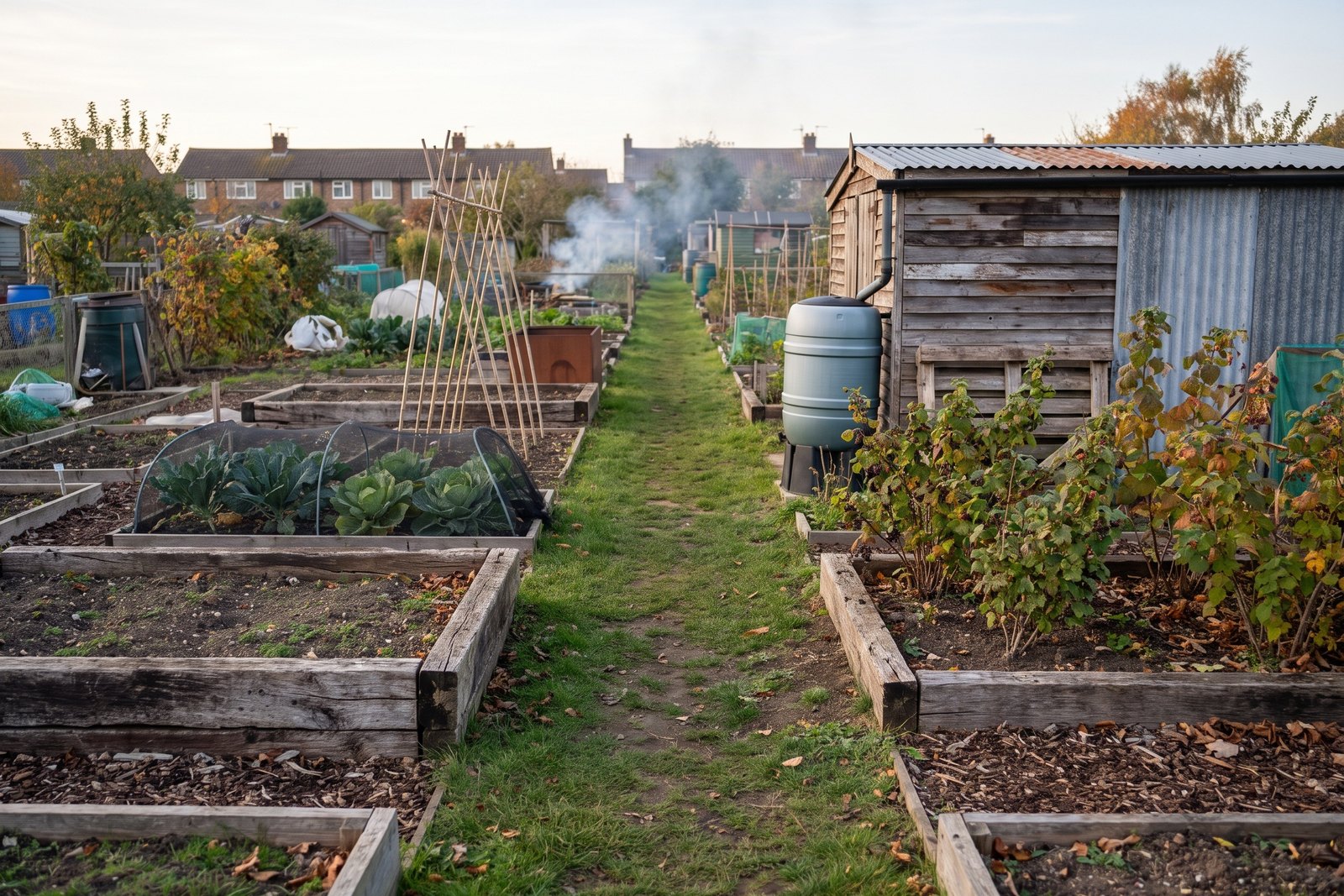
An allotment association buys more plants than most garden centres sell, and most of it at retail in March. This page explains who the allotment and community garden bodies are, what a group buys together and when, how VAT falls on food and ornamental plants, the health rules on seed potatoes and fruit and the law on the site's hedges.
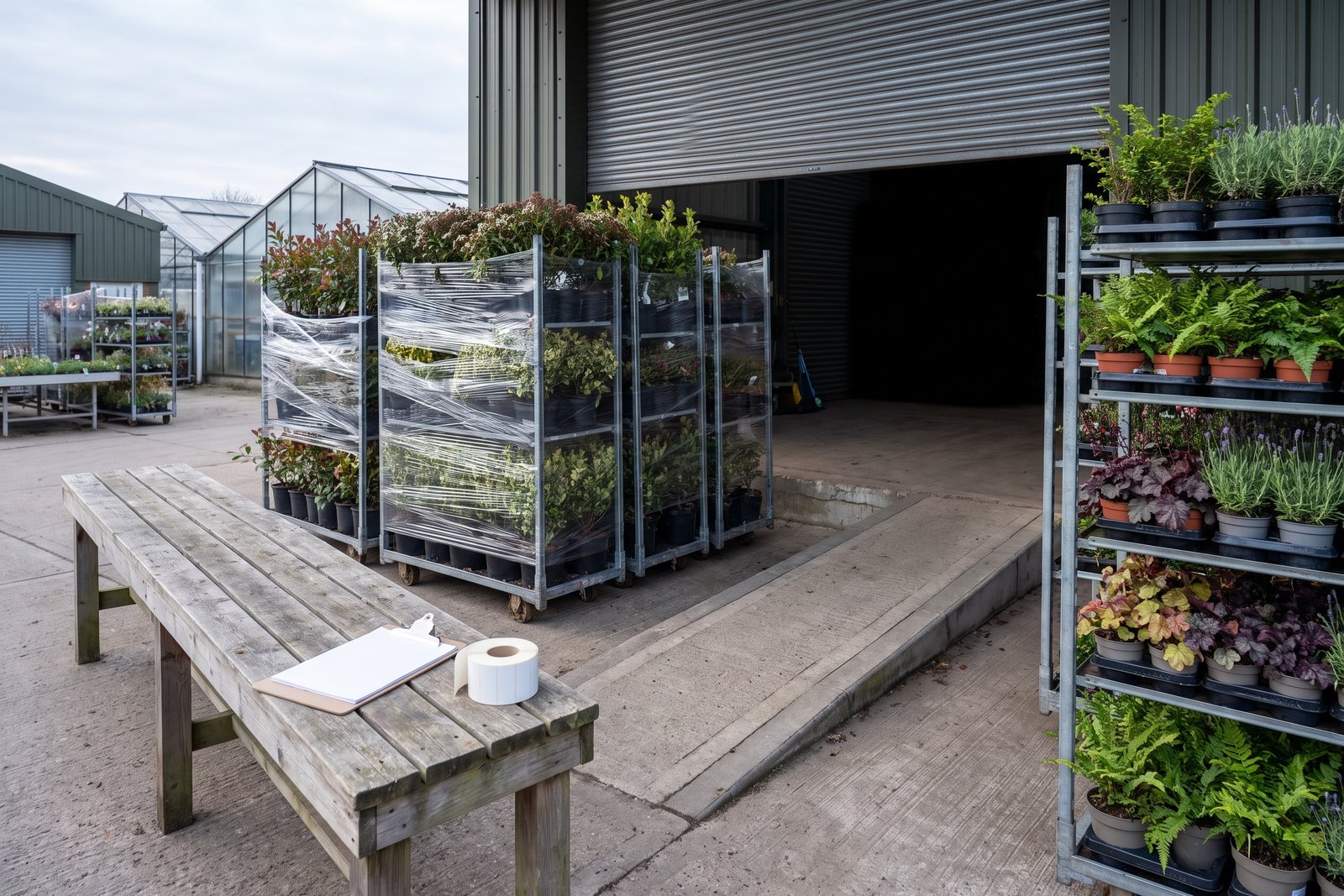
Plant Passports and Plant Health Rules for Plant Buyers in the UK
Every consignment of plants that moves between businesses in Great Britain carries a UK plant passport, and a buyer sits at the end of that chain. This page explains what the passport is and who issues it, what a buyer should expect and keep, how imported plants are checked, the rules on oak, the Northern Ireland position and Plant Healthy.
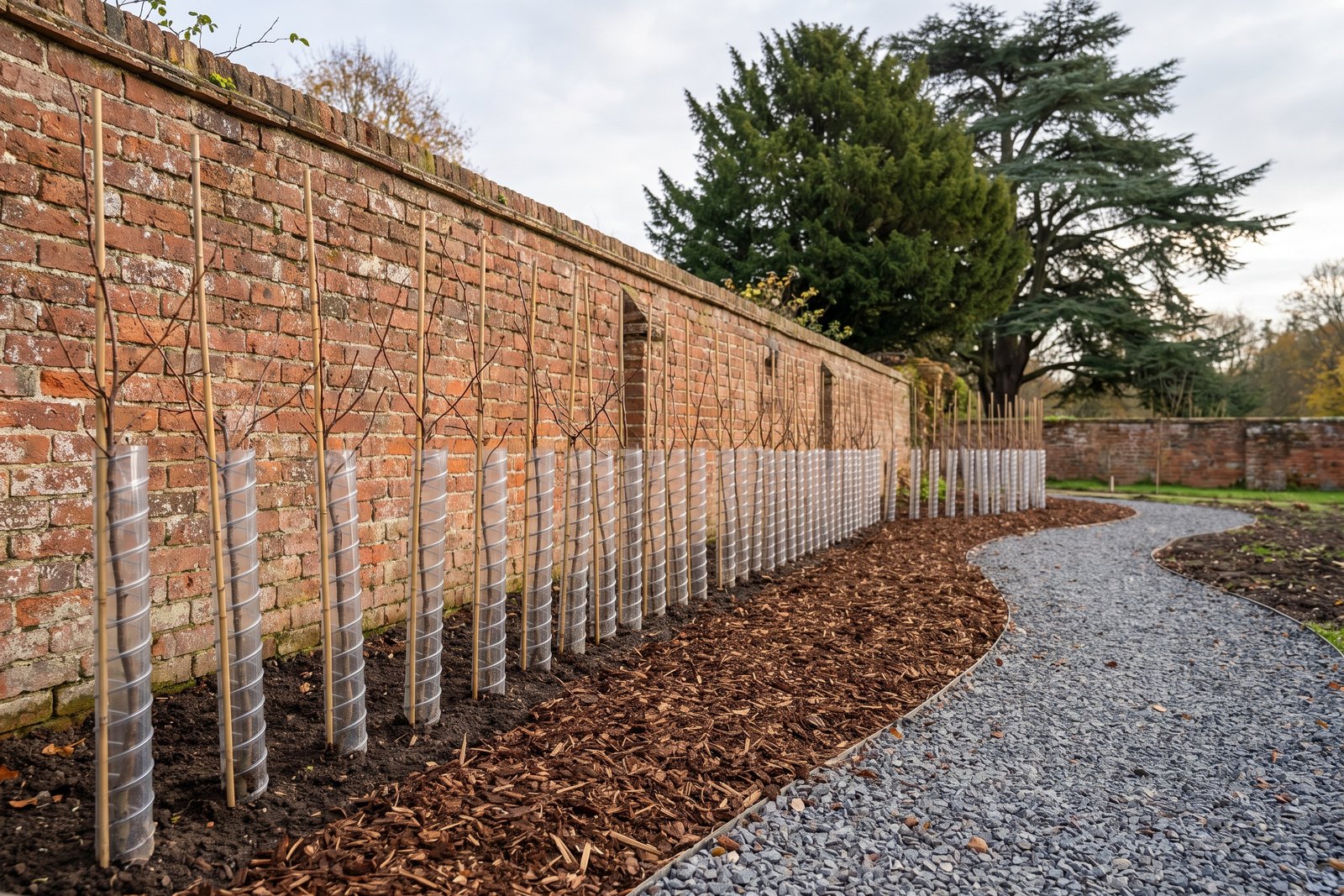
Hedging Plants for UK Gardens, and Who Grows Them
The same hedge can cost five times as much in pots in May as bare-root in December. This page sets out the hedging plants British growers list for native, formal, evergreen, screening and coastal hedges, the forms and grades they come in, how many a metre and when to plant, what has replaced box and the law on cutting.