Plant Sourcing for Allotment and Community Garden Groups
An allotment association buys more plants than most garden centres sell, and most of it at retail in March. This page explains who the allotment and community garden bodies are, what a group buys together and when, how VAT falls on food and ornamental plants, the health rules on seed potatoes and fruit and the law on the site's hedges.
Updated 31 October 2026. Grower totals from the live uk.hortosapp.com county pages on 31 October 2026; this page quotes no HortOS price figure, because growers are still adding their lists.
On this page
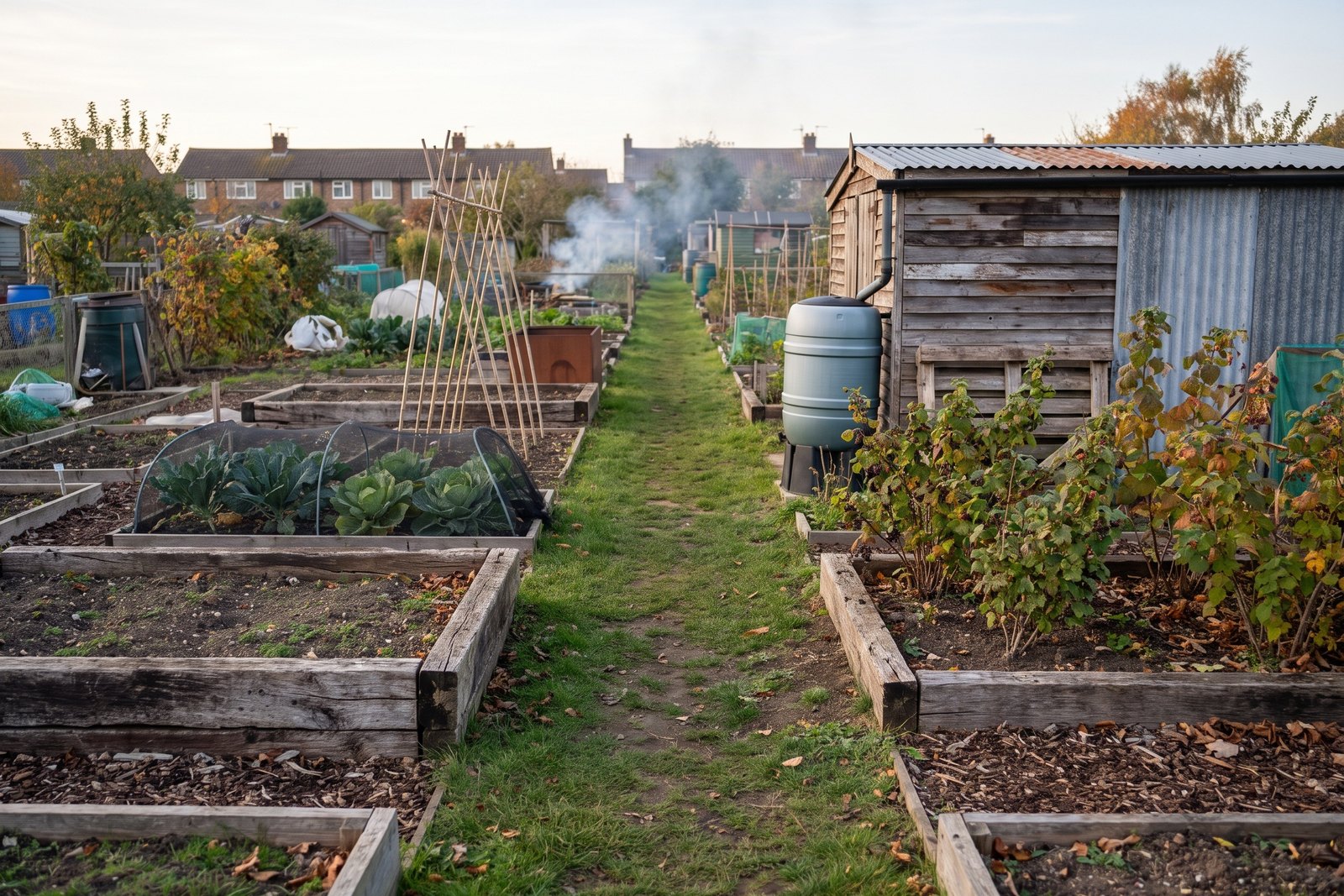
An allotment association buys more plants than most garden centres sell. Seed potatoes by the sack for a hundred plots, onion sets by the thousand, fruit bushes for the communal orchard, hedging for the boundary, herbs and strawberries for the trading hut, and the trees, perennials and wildflowers for the shared ground that every site now has. Most of it is bought at retail, plot by plot, in March. Bought together, from the trade, in the right month, it costs a fraction and arrives in better condition.
This page explains who the allotment and community garden bodies are, what a group buys together and from whom, the seasons and forms the trade sells in, how VAT falls on food plants and ornamental ones, the plant health rules that touch seed potatoes and fruit, the law on the site's hedges, and where the growers are. It draws on HortOS, a free directory of wholesale plant growers in the United Kingdom, listed by county, to which each grower adds its own availability and trade prices, and on what the National Allotment Society, Social Farms and Gardens, HM Revenue and Customs and the government publish. It quotes no HortOS price figure, because growers are still adding their lists to the UK site.
Quick facts
| The bodies | The National Allotment Society represents allotment holders across the United Kingdom with more than 125,000 members and offers legal advice and insurance. Social Farms and Gardens is the charity for community gardens and farms, with 3,500 member groups. Incredible Edible is the network for public food growing. |
|---|---|
| What is bought together | Seed potatoes, onion sets and garlic; bare-root fruit trees, bushes and canes; strawberry runners; herbs and vegetable plugs; hedging and trees for the site; perennials and wildflowers for the shared ground. |
| VAT | Seeds and plants of species grown for human food, and fruit trees and bushes sold for their fruit, are zero-rated. Ornamental plants, hedging and most trees carry VAT at 20 per cent. |
| Plant health | Seed potatoes need a UK plant passport at every stage of the trade chain, so a society buys them from an authorised supplier and asks the Animal and Plant Health Agency before it sells them on to members. |
| The season | Seed potatoes and onion sets from January; bare-root fruit, hedging and trees from November to March; plugs and herbs in spring; strawberry runners in late summer. |
| The hedges | In England an allotment site's hedge may not be cut between 1 March and 31 August; the buffer strip rule does not apply to allotments. |
Who the bodies are
Three organisations stand behind most groups. The National Allotment Society is the representative body for allotment holders in the United Kingdom, with more than 125,000 members; it works with government, landlords and developers, and gives its member associations legal advice, liability insurance and horticultural discounts. Social Farms and Gardens is the UK wide charity for community gardens, city farms and growing projects, with about 3,500 members and a network that advises national bodies. Incredible Edible is the network of groups that grow food in public places for anyone to pick. A new group joins one of them before it buys a plant, for the insurance as much as the advice.
Schools are the fourth party. The Royal Horticultural Society's school gardening campaign supports thousands of schools, many of them growing on an allotment site or beside a community garden, and a school's order for fruit trees, herbs and plugs is often added to the association's. Buying plants in bulk for a community group in the UK explains how a group opens an account or buys through one.
What a group buys together, and when
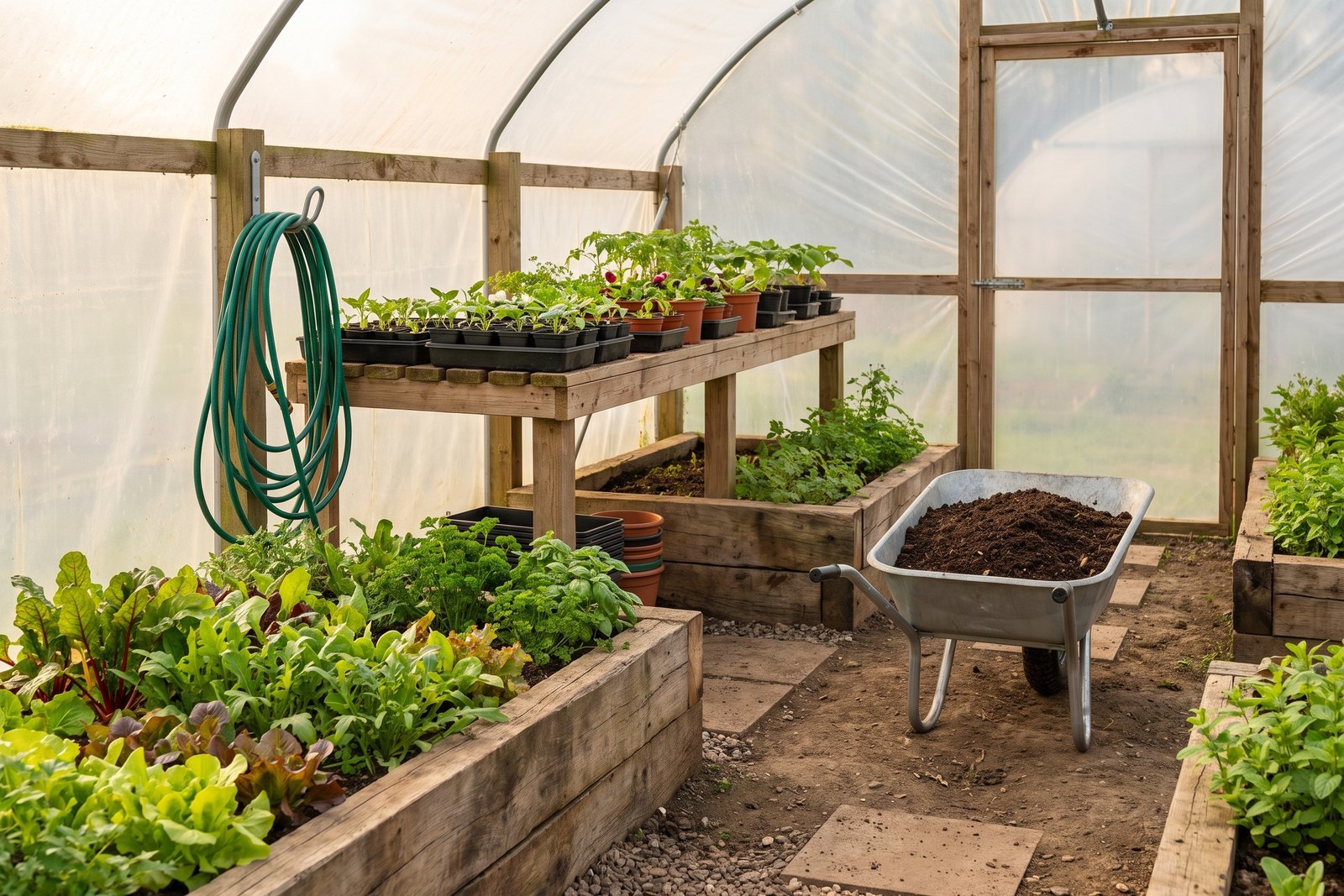
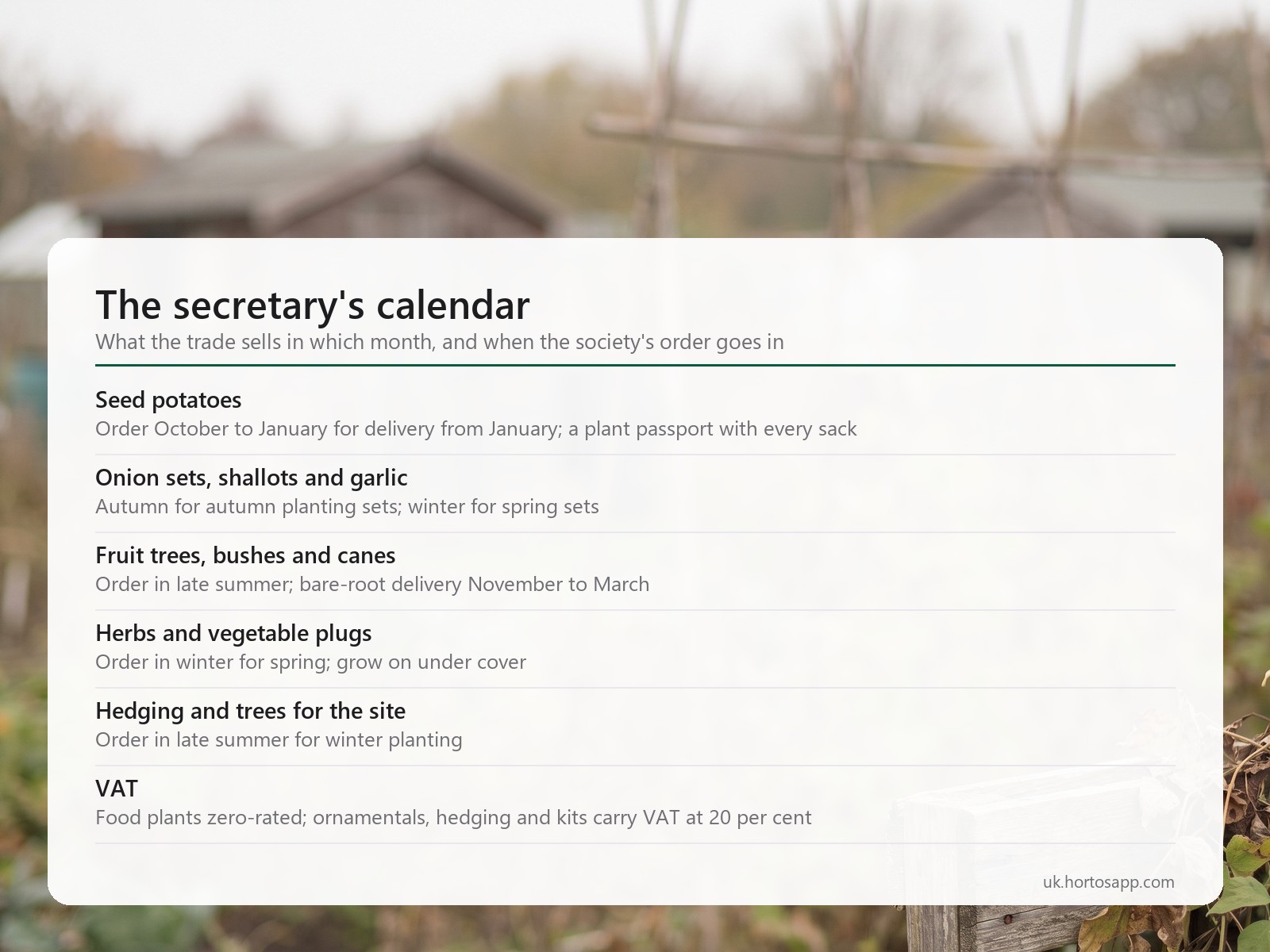
The trade sells each of these in a season and a form, and a group that orders in the right month gets the plants it wants at the trade's price. The table is the association secretary's calendar.
| What | Form the trade sells | When to order | Notes |
|---|---|---|---|
| Seed potatoes | Certified seed in 25 kilogram sacks or smaller packs, by variety | October to January for delivery from January | A plant passport at every stage; chit in trays from February |
| Onion sets, shallots, garlic | By the kilogram or the thousand | Autumn for autumn planting sets; winter for spring sets | Heat treated sets bolt less |
| Fruit trees | Bare-root maidens and two year bushes on named rootstocks | Late summer for November to March delivery | The rootstock sets the size; ask for the pollination groups |
| Bush and cane fruit | Bare-root canes, bushes and strawberry runners | Late summer; runners from July | Buy fruit stock from a specialist fruit nursery for health |
| Herbs and vegetable plugs | Plug trays and nine centimetre pots | Winter for spring delivery | Grow on under cover for the trading hut or the plant sale |
| Hedging and trees for the site | Bare-root whips and standards; rootballed evergreens | Late summer for winter planting | Native mixes for a boundary; fruit and nut trees for an edible hedge |
| Wildflowers and perennials | Plugs, nine centimetre and two litre pots, seed | Autumn and spring | For the shared ground, the orchard floor and the pollinator strips |
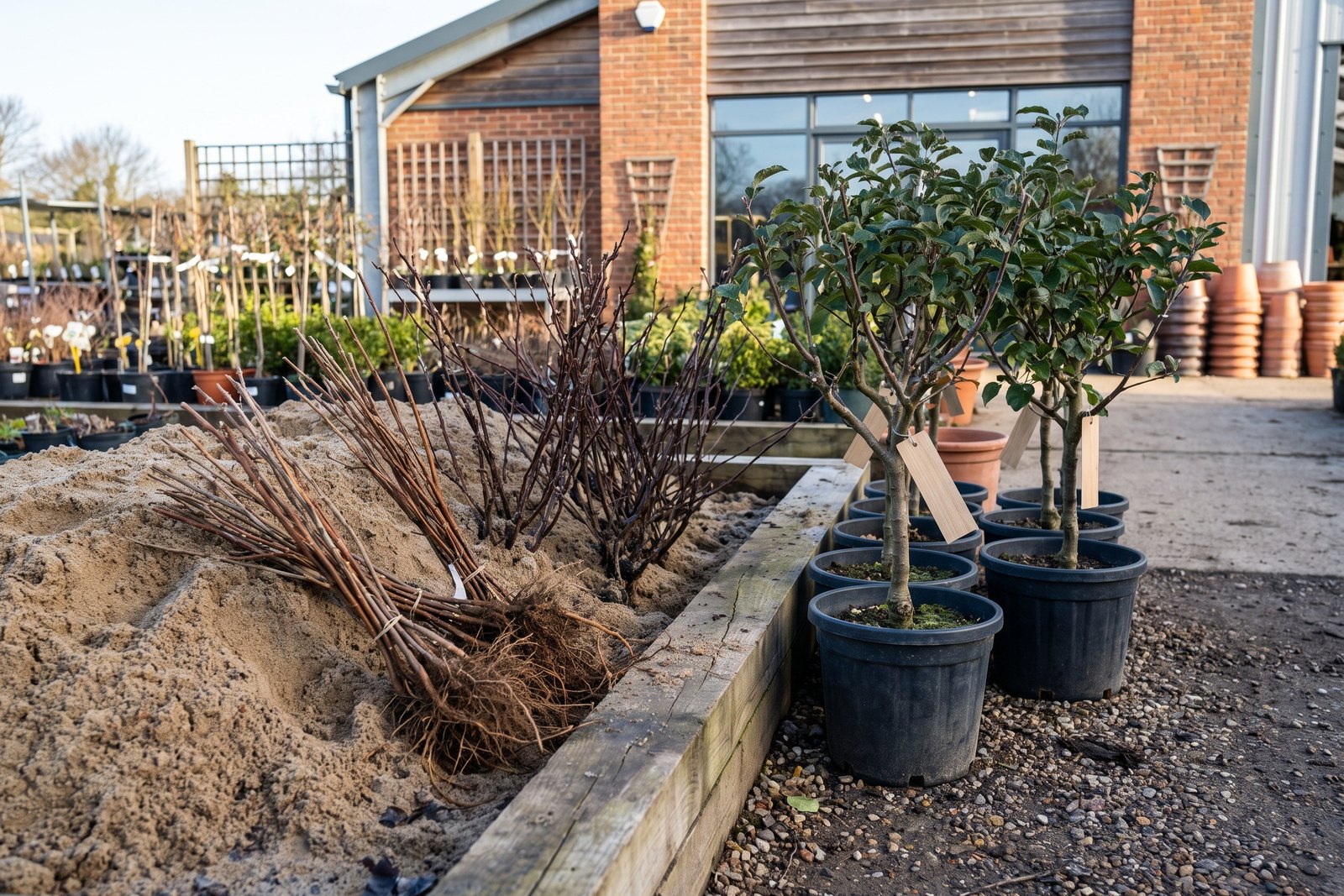
Fruit is the purchase that most rewards buying from the trade. A specialist fruit nursery sells maidens and two year trees on the rootstock the site needs, grafted and grown in Britain, with the pollination group on the list, and it lifts them bare-root in winter at a price a garden centre cannot match in a pot in April. Bare-root season in the UK explains the grades and how the plants are kept between delivery and planting.
VAT on food plants and ornamental ones
HM Revenue and Customs zero rates seeds and plants of species generally grown for human food, and trees and bushes held out for sale for their edible fruit; its notice on seeds and plants lists what qualifies. Seed potatoes, onion sets, vegetable plugs, culinary herbs of the kinds grown mainly for the kitchen, fruit trees and bushes sold for their fruit are zero-rated. Ornamental plants, hedging, most trees, grass seed and plants sold for their flowers carry VAT at 20 per cent, and so does a growing kit even when its seeds would not. A society that is not VAT registered pays the tax on the ornamental part of its order and budgets accordingly; on the food plants there is none to pay. A treasurer who separates the two on the order sees the difference on the invoice.
Plant health: seed potatoes and fruit
Two of the things a society buys most carry plant health rules of their own. Seed potatoes must have a UK plant passport at every stage of the trade chain in Great Britain, so a society buys them from an authorised supplier, which is every reputable seed merchant, and the passport arrives with the sack. A society that then sells seed potatoes on to its members through a trading hut is supplying other people, and the government's guidance says a passport is not needed only at the final sale to a person buying for personal use; a society that is unsure of its own position asks the Animal and Plant Health Agency, which answers such questions. Fruit stock is the other case: viruses and soil borne diseases travel with strawberry runners, raspberry canes and fruit trees, and the trade's answer is to buy from specialist fruit nurseries that raise their stock under the government's certification schemes rather than from plot to plot. Plant passports and plant health rules for plant buyers sets out the passport rules in full.
The site's hedges and trees
Most allotment sites are bounded by a hedge, and in England the Management of Hedgerows Regulations 2024 reach it. The government's guidance says the definition of agricultural land in the regulations includes allotments, so the closed period applies: no cutting or trimming between 1 March and 31 August inclusive, with the limited exceptions in the regulations, such as a hedge that is a danger to a road or footpath. The buffer strip rule does not apply to allotments. Nesting birds are protected everywhere in the United Kingdom in any case, and the trade cuts hedges in winter. A site that is planting a new boundary buys native whips bare-root in late summer for winter planting, and Hedging plants for UK gardens, and who grows them gives the mixes and spacings.
Community orchards on allotment land follow the same winter calendar: bare-root trees on the rootstock that suits the soil and the space, planted November to March, staked, guarded and mulched, with the orchard floor sown or planted for pollinators.
Running the order
The order is run by one person with a spreadsheet. Members put their names and quantities against the varieties by a closing date, the secretary rounds the totals up to the trade's units, sacks, bundles and trays, and sends one order to each supplier with the site as the delivery address and the association as the invoice address. Payment is collected from members before the order goes, the trading hut takes delivery on a Saturday morning, and the surplus goes on the hut's shelves. Societies that have done this for years add a small margin to the hut's prices to pay for the site's own planting, which is how many an orchard was funded.
Where the growers are
The growers directory on HortOS lists more than 2,900 growers that sell plants to the trade across the United Kingdom, by county and town, and each grower controls its own listing, prices and delivery. The county pages (Lancashire, Lincolnshire, Cambridgeshire, Staffordshire) show the nurseries near a site. Growers are being added now, and lists and trade prices appear as each grower sends its own. Anyone can read the pages and only the trade can order. The seed merchants and fruit nurseries sell nationally by post and carrier; the hedging, tree, herb and perennial growers are nearer than most groups think, and the county pages show them. On 31 October 2026 the county pages listed 199 in Lancashire, 153 in Lincolnshire, 149 in Cambridgeshire, 144 in Staffordshire, 136 in Norfolk and 133 in Cheshire.
What to watch for
- Seed potatoes bought late. The varieties members asked for are sold out by February; order in the autumn.
- Fruit stock passed from plot to plot. It carries virus; buy canes, runners and trees from a specialist fruit nursery.
- A fruit tree on the wrong rootstock. A vigorous stock in a small plot is a problem for twenty years; ask the nursery which stock suits the space.
- Cutting the site hedge in spring. In England it is an offence between 1 March and 31 August on allotment land.
- VAT budgeted on the food plants. There is none; budget it on the hedging, the ornamentals and the kits.
- A trading hut that sells seed potatoes without asking whether it is in the passport chain. One email to the Animal and Plant Health Agency settles it.
Getting it right
- Join the National Allotment Society or Social Farms and Gardens for the insurance and the advice before the first order.
- Collect members' orders against a closing date in early autumn for potatoes, fruit, hedging and trees, and in winter for plugs and herbs.
- Round up to the trade's units and send one order per supplier, with the site as the delivery address.
- Separate food plants from ornamental ones on the order so the VAT falls where it should.
- Buy seed potatoes and fruit stock from authorised and specialist suppliers, keep the passports, and ask the agency about the hut.
- Plant bare-root fruit, hedging and trees between November and March, and cut the site's hedges only in winter.
A word of caution
The VAT position is summarised from HM Revenue and Customs' notice and a treasurer relies on the notice, not on this page. The plant passport rules are described in general terms and the Animal and Plant Health Agency's answer to a society's own question is the one that counts. The hedgerow regulations are England's, as they stood on the date shown; Scotland, Wales and Northern Ireland have their own rules for hedges on agricultural land. Rootstocks, varieties and pollination are the fruit nursery's advice to give. HortOS lists growers; it does not certify fruit stock or seed potatoes, and a society that needs assurance asks the supplier for it in writing.
Sources
- The National Allotment Society: the allotment holders' body.
- Social Farms and Gardens: the community garden charity.
- HM Revenue and Customs, VAT Notice 701/38, seeds and plants that can be zero-rated: food plants and VAT.
- GOV.UK, issue plant passports to move regulated plant material in Great Britain: seed potatoes and the passport.
- GOV.UK, the Management of Hedgerows (England) Regulations 2024, regulatory approach: allotment hedges and the closed period.
- Incredible Edible: the community food growing network.
- Royal Horticultural Society, school gardening: the schools campaign.
More guides
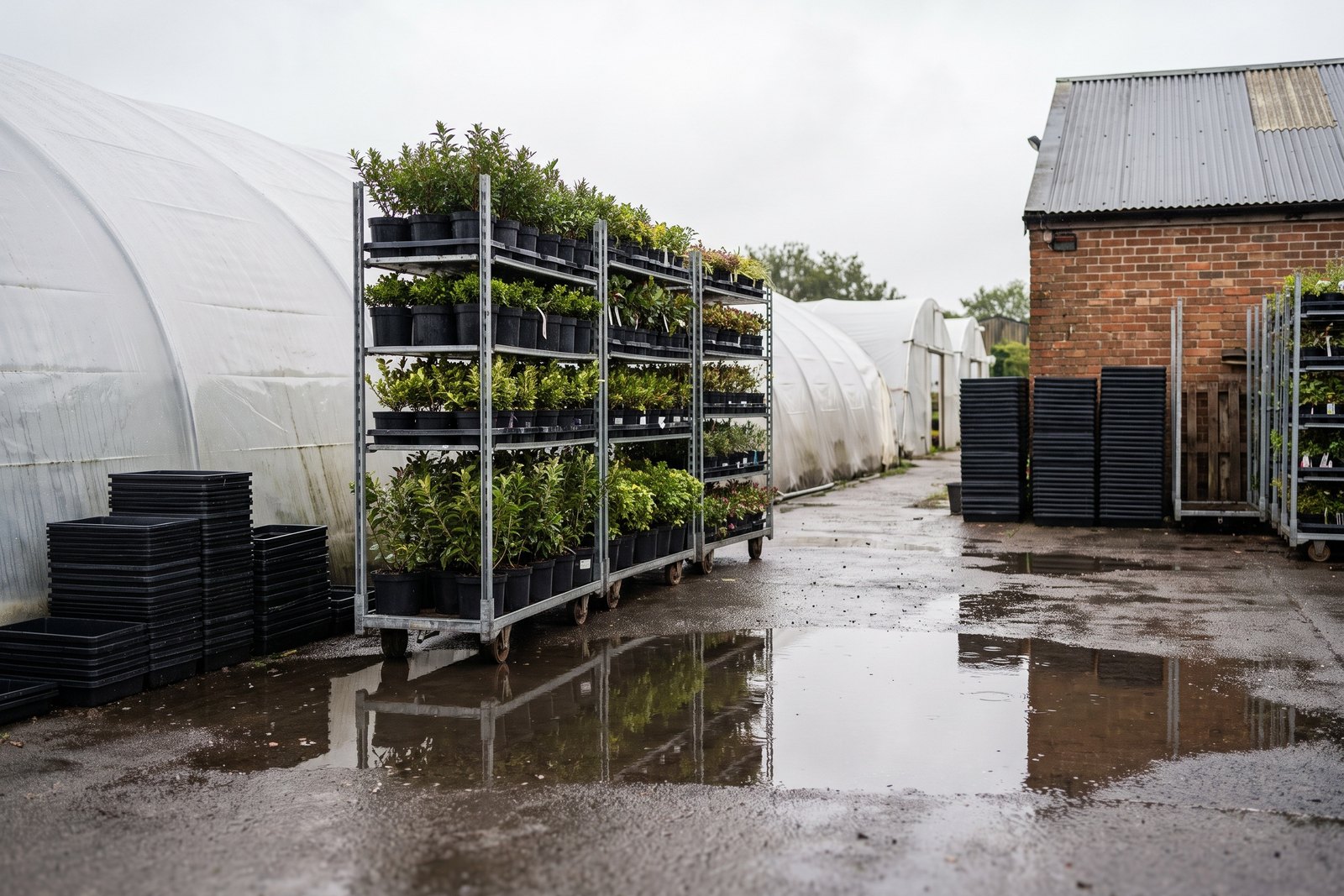
Buying Plants in Bulk for a Community Group in the UK
Garden societies, allotment associations, schools and In Bloom groups can buy plants by the tray, trolley and bundle from British wholesale nurseries when they order like the trade. This page explains what bulk means to a nursery, the three ways a group buys, how a plan becomes quantities, how VAT falls and what happens on delivery day.
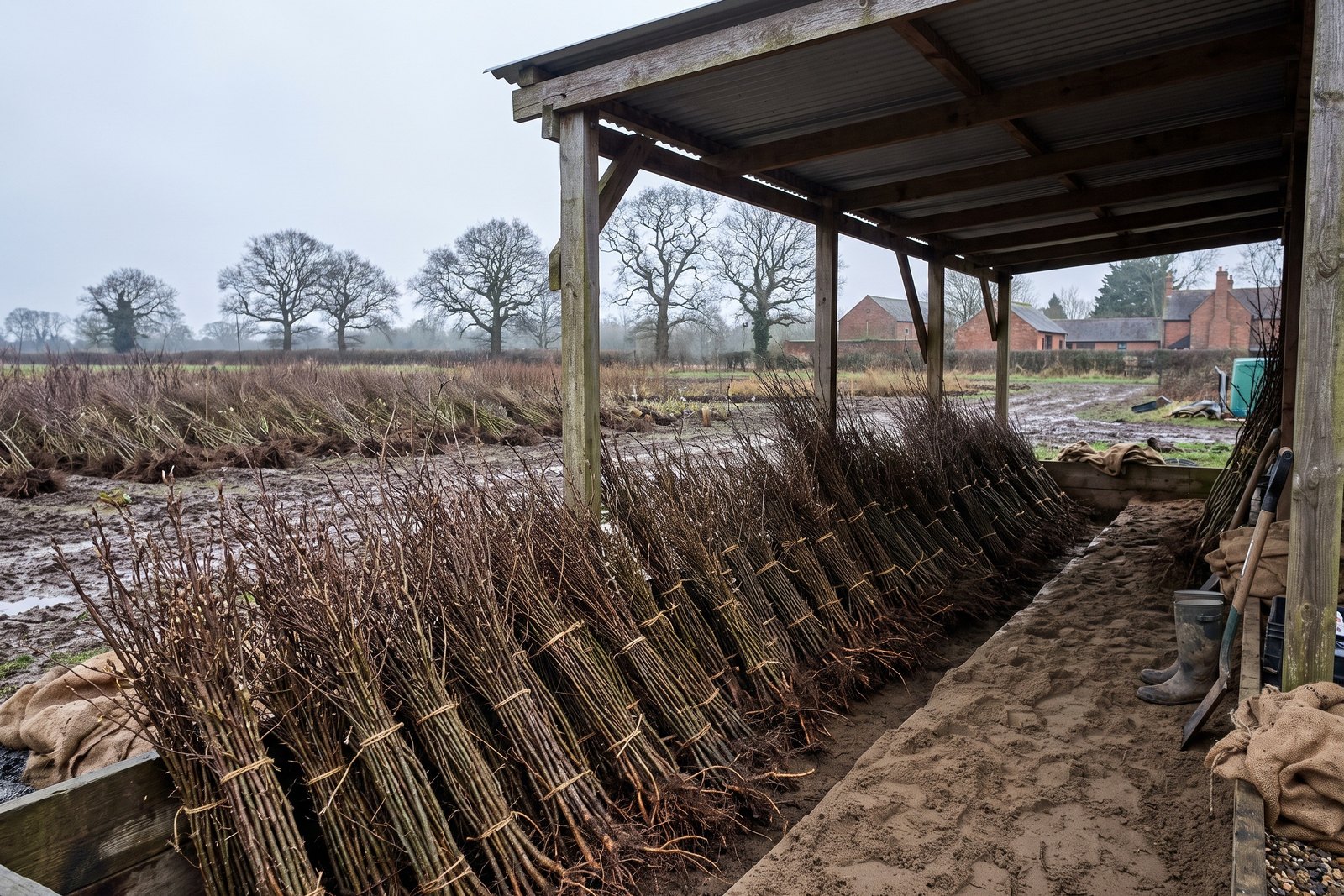
Bare-Root Season in the UK: What Growers List and When
From November to March British nurseries lift deciduous trees, hedging, roses and fruit from open ground and sell them bare-root at a fraction of the container price. This page explains what is sold this way, the height, girth and transplant codes on a list, how the season runs and how the plants are handled.
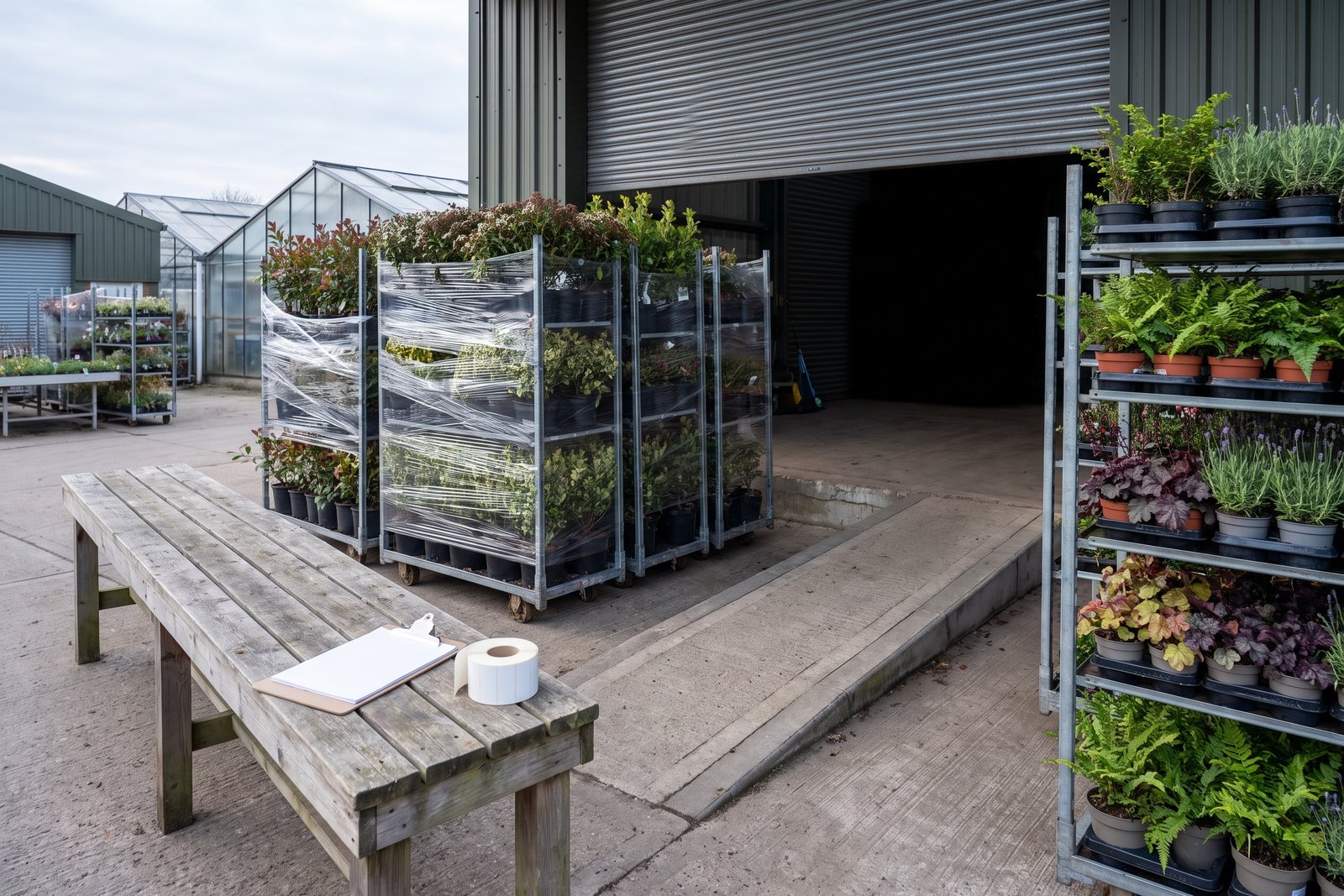
Plant Passports and Plant Health Rules for Plant Buyers in the UK
Every consignment of plants that moves between businesses in Great Britain carries a UK plant passport, and a buyer sits at the end of that chain. This page explains what the passport is and who issues it, what a buyer should expect and keep, how imported plants are checked, the rules on oak, the Northern Ireland position and Plant Healthy.