Buying Plants in Bulk for a Community Group in the UK
Garden societies, allotment associations, schools and In Bloom groups can buy plants by the tray, trolley and bundle from British wholesale nurseries when they order like the trade. This page explains what bulk means to a nursery, the three ways a group buys, how a plan becomes quantities, how VAT falls and what happens on delivery day.
Updated 15 October 2026. Grower totals from the live uk.hortosapp.com county pages on 15 October 2026; this page quotes no HortOS price figure, because growers are still adding their lists.
On this page
A garden society with a border to replant, an allotment association putting in a boundary hedge, a school with a bare fence line, an In Bloom group dressing a high street: each works out that it needs two hundred plants, not twelve. The garden centre price of two hundred plants is more than the grant. The one idea that matters most is that a wholesale nursery sells by the tray, the trolley and the bundle to whoever orders like the trade, and that a community group can order like the trade if it plans a season ahead.
This page explains what bulk means to a British nursery, the three ways a group buys, how to turn a planting plan into quantities, what to put in a request for a quote, how VAT falls on a group, and what happens on delivery day. It draws on HortOS, a free directory of wholesale plant growers in the United Kingdom, listed by county, to which each grower adds its own availability and trade prices, and on the more than 2,900 growers that sell plants to the trade across the United Kingdom listed there. It also draws on what HM Revenue and Customs, the plant health authorities and the trade's own bodies publish. It is a guide to the process, not a substitute for asking the grower.
Quick facts
| What bulk means | Nine centimetre pots come in trays of fifteen or eighteen, plugs in trays of around a hundred, two and three litre pots by the shelf on a Danish trolley, bare-root hedging in bundles of twenty-five or fifty. An order that fills whole trays, shelves and bundles is the one a nursery prices best. |
|---|---|
| Who can buy | Each nursery sets its own terms. Many open a trade account for a constituted group, a parish council or a school; others sell to a group through a landscaper or a community nursery that already holds one. Ask before you plan. |
| Quantities | Count the planting area, choose a size for each plant, and multiply by a planting density. Rounding up to whole trays and bundles costs little and saves a second order. |
| VAT | Ornamental plants carry VAT at 20 per cent. Seeds and plants grown for food are zero-rated. A group that is not VAT registered cannot claim VAT back, so it budgets the gross figure. |
| Delivery | A nursery delivers on its own lorry, on a pallet or trolley carrier, or asks you to collect. Carriage is a line on the quote, and a trolley may carry a deposit or hire charge until it goes back. |
| Timing | Bare-root plants are lifted from November to March. Summer bedding is ordered in winter for May. Container shrubs and perennials can be had for most of the year, but the plant you want in the size you want is not. |
What bulk means to a nursery
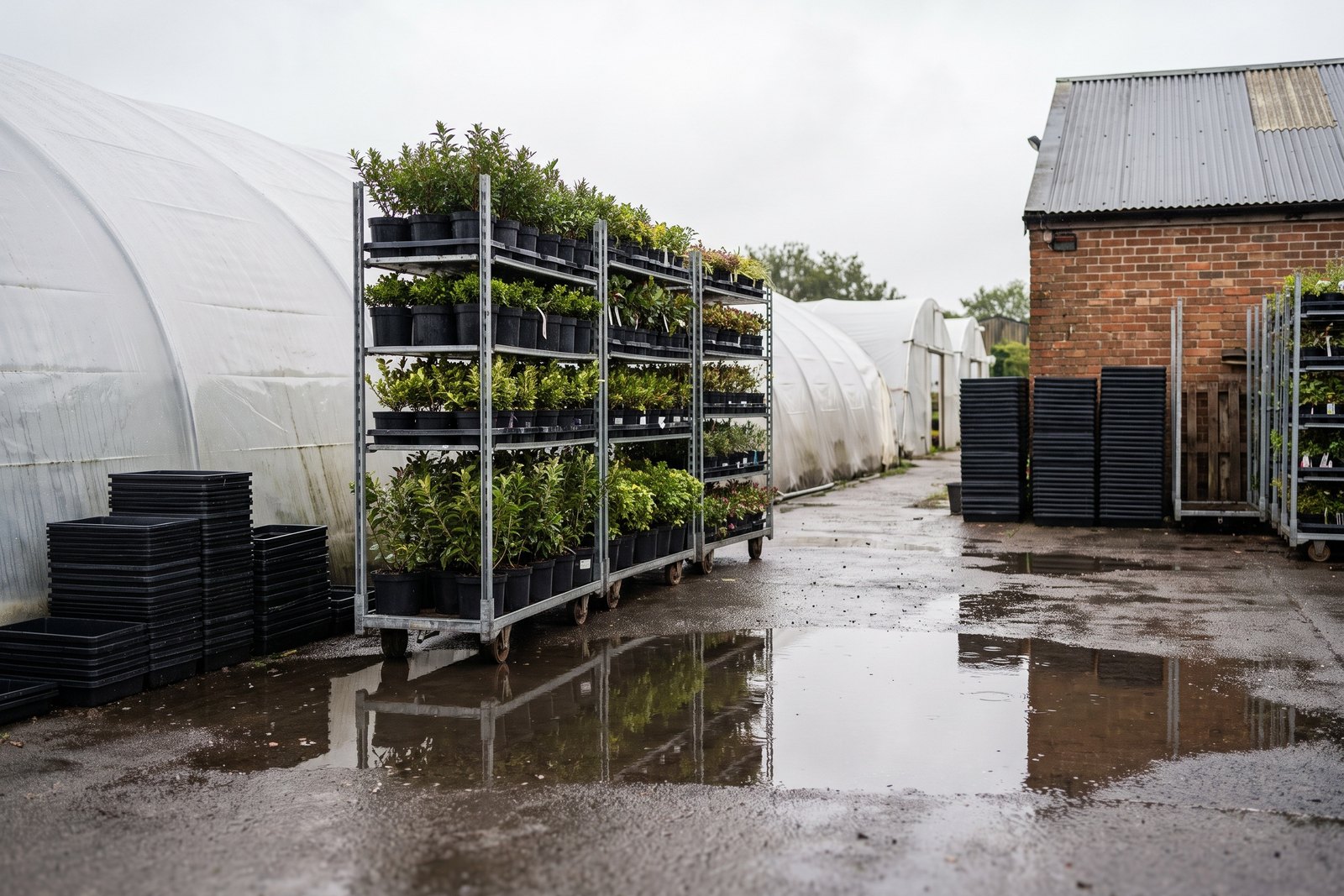
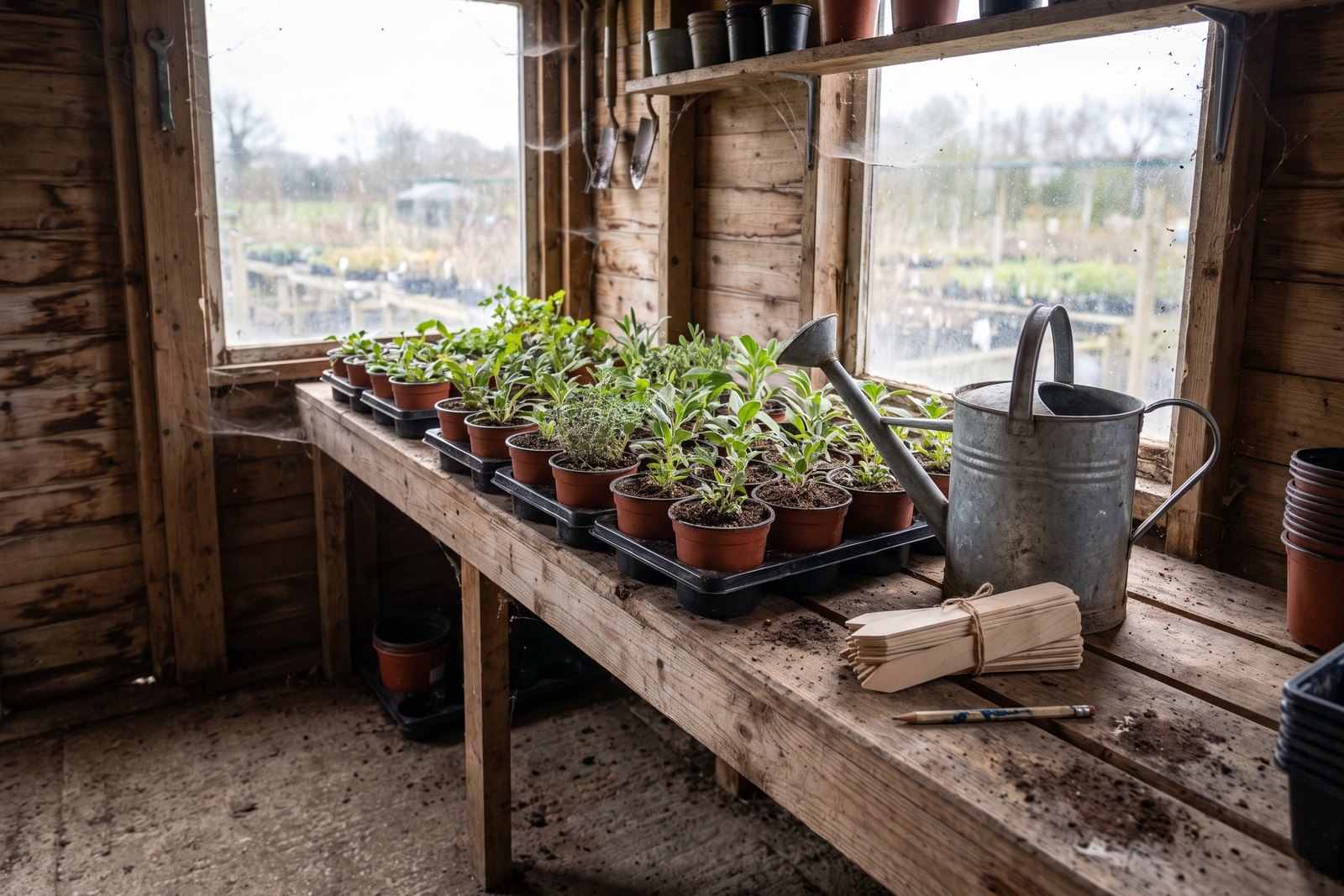
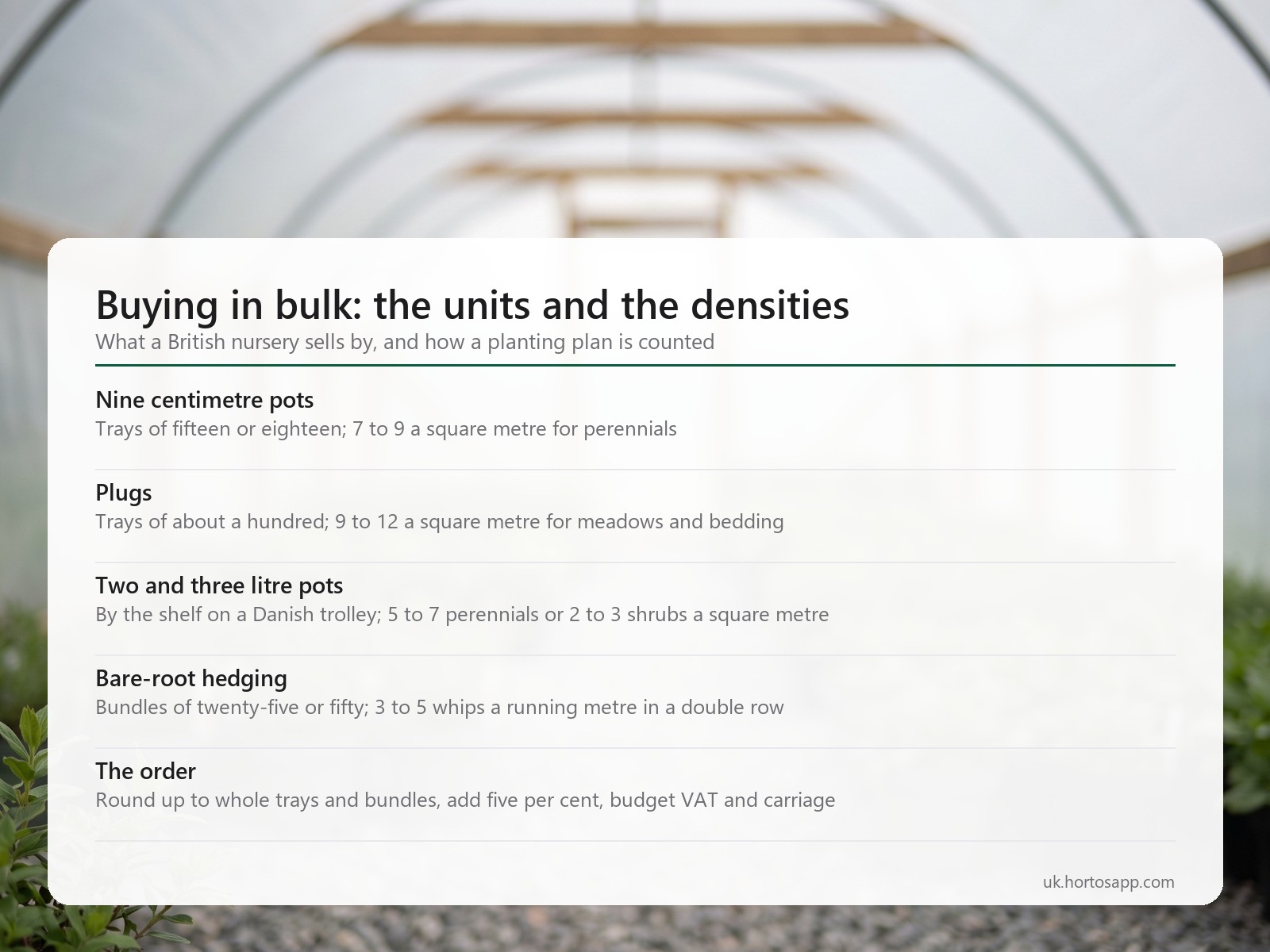
A production nursery grows in batches and sells in the units it grows in. Young perennials and herbs sit in nine centimetre pots, fifteen or eighteen to a tray. Plugs for bedding and wildflower meadows come in cell trays of roughly a hundred. Shrubs in two and three litre pots travel on the shelves of a steel Danish trolley, the wheeled rack every British nursery and garden centre uses, and a full trolley is the unit a lorry is priced on. Hedging whips and bare-root trees come in bundles of twenty-five, fifty or a hundred, tied and labelled by size.
Bulk, to the nursery, is an order that respects those units. Two hundred nine centimetre plants is a tidy order of eleven to fourteen trays. Two hundred and seven plants of nine kinds in four sizes is a morning of picking from different benches, and the price list reflects it. Most lists step the price down at quantity breaks, often at ten, twenty-five or a hundred of one plant in one size. A group that chooses fewer kinds in larger numbers gets the better price and a more coherent planting.
Three ways a group buys
The first way is a trade account of the group's own. A constituted society, a parish or town council, a school or a registered charity can ask a nursery to open one. The nursery will want the organisation's name and address, a contact, an invoice address and, for a first order, payment in advance. Some nurseries open accounts freely for groups; some sell only to landscaping and retail businesses; a few are retail nurseries with a trade list beside the public price list. The county pages on HortOS show which nurseries list near you, and a short email settles the rest.
The second way is through someone who already holds an account. A landscaper doing the installation, a council's grounds contractor, a community nursery, a local garden centre or an allotment association's trading hut can add a group's order to its own and pass it on at cost or with a small handling charge. The group gets trade prices without the paperwork, and the account holder carries the relationship with the grower.
The third way is to pool. Two or three groups in one town, an In Bloom committee and the schools it works with, or the allotment sites in one district can place a single order that fills a lorry, with one delivery address and one invoice split afterwards. Pooling is how small groups reach the quantity breaks and the carriage paid threshold that a nursery sets for a free delivery.
Working out quantities
Start from the plan, not the catalogue. Measure each bed in square metres and each hedge in running metres. Decide the size of plant for each job. Plugs and nine centimetre pots suit ground cover and meadows, two litre pots the perennials that must show in their first summer, three litre pots the shrubs, and bare-root whips the hedging and woodland edges. Larger containers are for the plant that must look established on day one. Then apply a planting density. The figures below are the ones British designers and contractors commonly use; the grower will say if a particular plant wants more or less room.
| Plant and size | Typical density | What 100 square metres needs | Notes |
|---|---|---|---|
| Wildflower or bedding plugs | 9 to 12 a square metre | 900 to 1,200 plugs | Nine to twelve trays of a hundred; plant into bare or stripped ground |
| Perennials, 9 cm pot | 7 to 9 a square metre | 700 to 900 pots | About fifty trays; a second summer before the bed closes over |
| Perennials, 2 litre pot | 5 to 7 a square metre | 500 to 700 pots | Closes over in its first summer; heavier to handle |
| Shrubs, 3 litre pot | 2 to 3 a square metre | 200 to 300 pots | Space by the mature width on the label, not the pot |
| Hedging whips, bare root | 3 to 5 a running metre | Per metre, not per square metre | A double staggered row for a stockproof or screening hedge |
| Spring bulbs | 50 to 100 a square metre | 5,000 to 10,000 bulbs | Ordered in late summer for autumn planting |
Round up to whole trays and bundles, then add five per cent for losses, edges and the plants that arrive smaller than the rest. A planting that is ordered short needs a second delivery, and a second delivery carries a second carriage charge.
Asking for a quote
A nursery answers quickly when the request looks like the trade's. Send a list, one line a plant, with the botanical name, the size, the quantity and any grade that matters, such as a girth for a tree or a height for a whip. Add the delivery postcode, the week you want the plants, whether you can take a trolley or a pallet off a lorry, who the invoice goes to, and whether you hold a trade account. Ask for prices ex VAT with carriage shown separately, and say whether a substitution of a similar plant is acceptable where a line has sold out.
Read the quote the same way. A trade quote is per plant, ex VAT, for the quantity asked, and it is usually valid for a stated time. Carriage, pallet or trolley charges and any deposit sit on their own lines. A quote that says POA against a plant means the price depends on the batch and the quantity, and a phone call settles it. How wholesale plant pricing and availability work in the UK trade explains the rest of the list.
VAT, paperwork and plant passports
Ornamental plants, trees and shrubs carry VAT at the standard rate of 20 per cent. Seeds and plants of species grown for human food, and fruit trees and bushes sold for their fruit, are zero-rated under HM Revenue and Customs' notice on seeds and plants. A group that is not registered for VAT pays it and cannot claim it back, so a budget for an ornamental planting is the trade price plus a fifth. A charity has no general VAT relief on plants. Keep every invoice: a grant funder asks for them, and so does the treasurer at the annual meeting.
Plants for planting that move between businesses in Great Britain travel with a UK plant passport, a label the nursery is authorised to issue that records what the plant is and where it came from. A group buying plants to plant them is the final user and need not issue anything, but the label should arrive with the plants, and it is worth keeping with the delivery note in case a plant health question is ever asked. Plant passports and plant health rules for plant buyers sets out the rules.
Delivery day and the first week
A lorry needs somewhere to stop, a hard surface to wheel a trolley over, and people to unload. Check the plants against the delivery note before the driver leaves, count the trays, and note anything damaged or short on the note itself. Photograph a problem. Water container plants the day they arrive and every dry day after until they are in the ground. Bare-root plants stay in their bags in the shade or are heeled into a trench of soil or sand if planting is more than a day or two away.
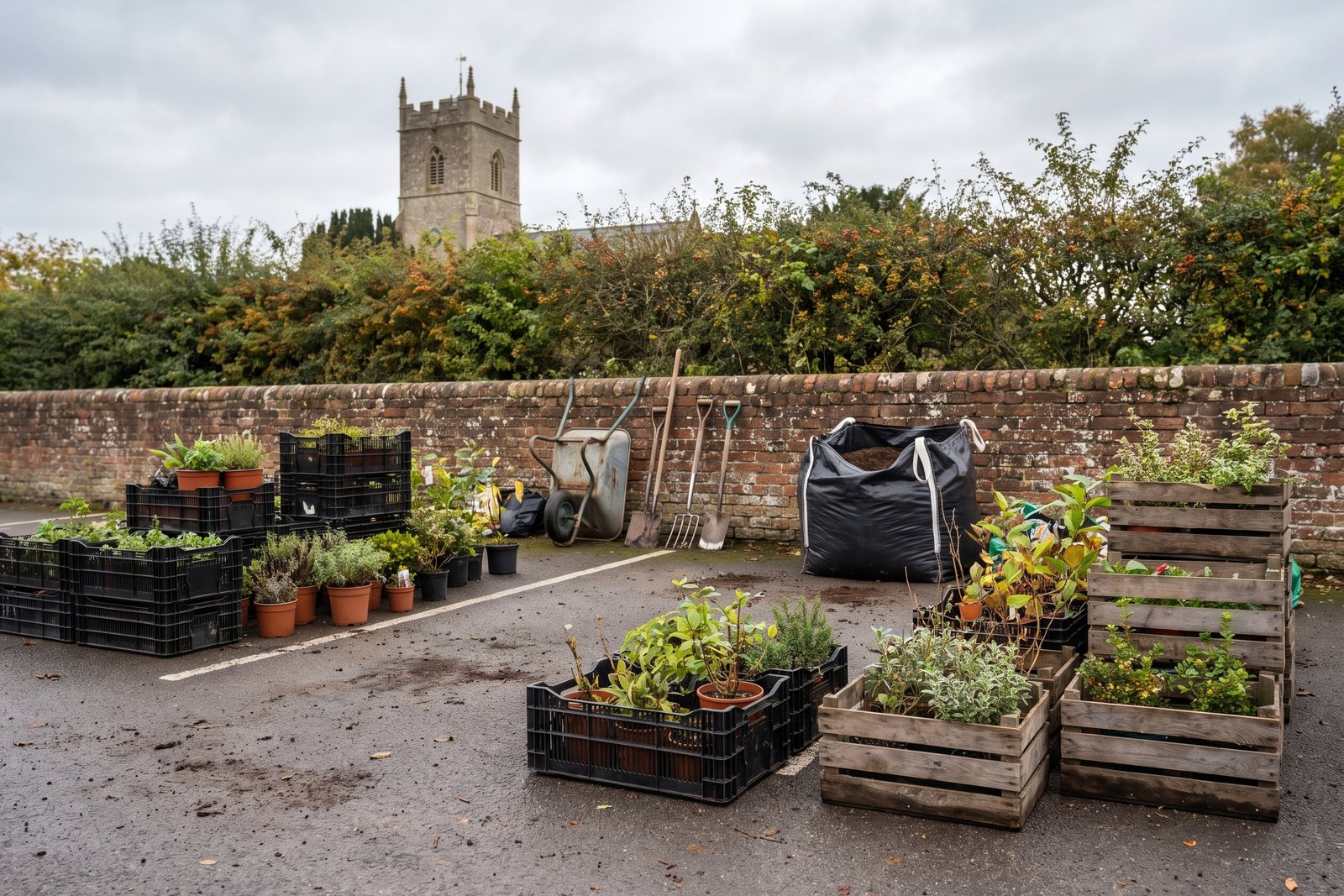
Plan the planting for the week the plants arrive, with a rota for watering in the month after. A planting that goes in on the day it is delivered and is watered for its first dry fortnight loses almost nothing. A pallet left by a hall for ten days in June loses a quarter of its plants, and the grower is not at fault.
Where the growers are
The growers directory on HortOS lists more than 2,900 growers that sell plants to the trade across the United Kingdom, by county and town, and each grower controls its own listing, prices and delivery. The county pages (Lancashire, Lincolnshire, Cambridgeshire, Staffordshire) show the nurseries near a site. Growers are being added now, and lists and trade prices appear as each grower sends its own. Anyone can read the pages and only the trade can order. The first step is to find the nurseries near the site that list the plants in question and to ask each whether it sells to a group. On 15 October 2026 the county pages listed 199 in Lancashire, 153 in Lincolnshire, 149 in Cambridgeshire, 144 in Staffordshire, 136 in Norfolk and 133 in Cheshire.
For a planting that must be ready for a date, order early. Bare-root season in the UK explains why hedging and trees are ordered in autumn, and Sourcing plants for an In Bloom or TidyTowns planting sets out the calendar a bedding grower works to.
What to watch for
- A plant list written in common names. Two nurseries will read it two ways. Use the botanical name and the size on every line.
- A quote with no carriage line. Ask, because a single pallet across the country can cost as much as the plants on it.
- Trolleys and pallets that were never returned. Deposits are charged and chased; agree the return before the lorry leaves.
- An order placed in April for a May planting. Bedding and most container stock is grown to order months ahead, and a late order is filled from what is left.
- Volunteers who cannot lift. A three litre shrub is light; a hundred of them on a trolley are not. Plan the unloading, not only the planting.
- Peat. If the group has a peat-free policy, say so in the request for a quote, because many young plants start their lives in peat. Peat-free growing: what UK nurseries supply now explains what to ask.
Getting it right
- Measure the beds and hedges, choose a size for each plant, and count the quantities with a density table before you write to anyone.
- Choose fewer kinds of plant in larger numbers. The planting reads better and the price is better.
- Decide how the group will buy: its own account, through an account holder, or pooled with another group.
- Send a trade-style request for a quote with botanical names, sizes, quantities, the postcode, the week and the invoice address.
- Budget the gross figure, VAT included, with carriage and a five per cent allowance for losses.
- Fix the planting day and the watering rota before the delivery is booked, and have the plants in the ground within the week.
A word of caution
The figures on this page are the ones the trade commonly works to, not the terms of any one nursery. Every grower sets its own minimums, account rules, carriage charges and returns policy, and a quote replaces anything written here. Planting densities depend on the plant, the soil and how soon the group wants the bed to close over; where a grower or a designer gives a different figure for a particular plant, theirs is the one to use. Where VAT matters to a grant, check the current HM Revenue and Customs notice rather than this summary.
Sources
- HM Revenue and Customs, VAT Notice 701/38, seeds and plants that can be zero-rated: which plants carry VAT.
- GOV.UK, issue plant passports to move regulated plant material in Great Britain: the label that travels with plants.
- Horticultural Trades Association: the UK trade's own body.
- Royal Horticultural Society, community gardening: support for In Bloom and neighbourhood groups.
- Social Farms and Gardens: the UK community garden charity.
More guides
How Wholesale Plant Pricing and Availability Work in the UK Trade
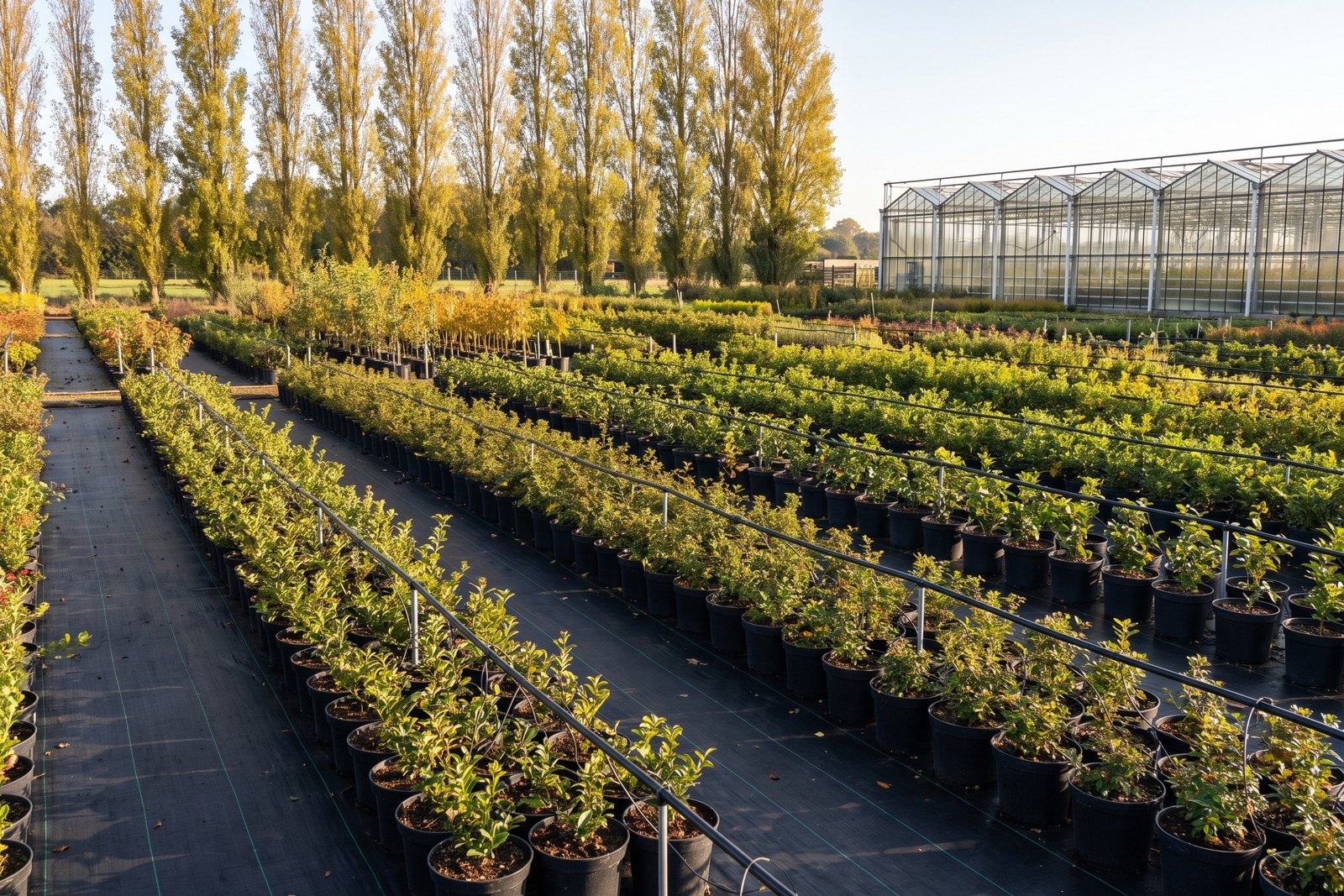
A trade price is per plant, per size, ex VAT and ex carriage, and the weekly availability list says what can be had now. This page explains how the UK nursery trade is shaped, how a price is built, what the list's columns mean, the size ladder, why prices have moved and how to open an account.
Plant Passports and Plant Health Rules for Plant Buyers in the UK
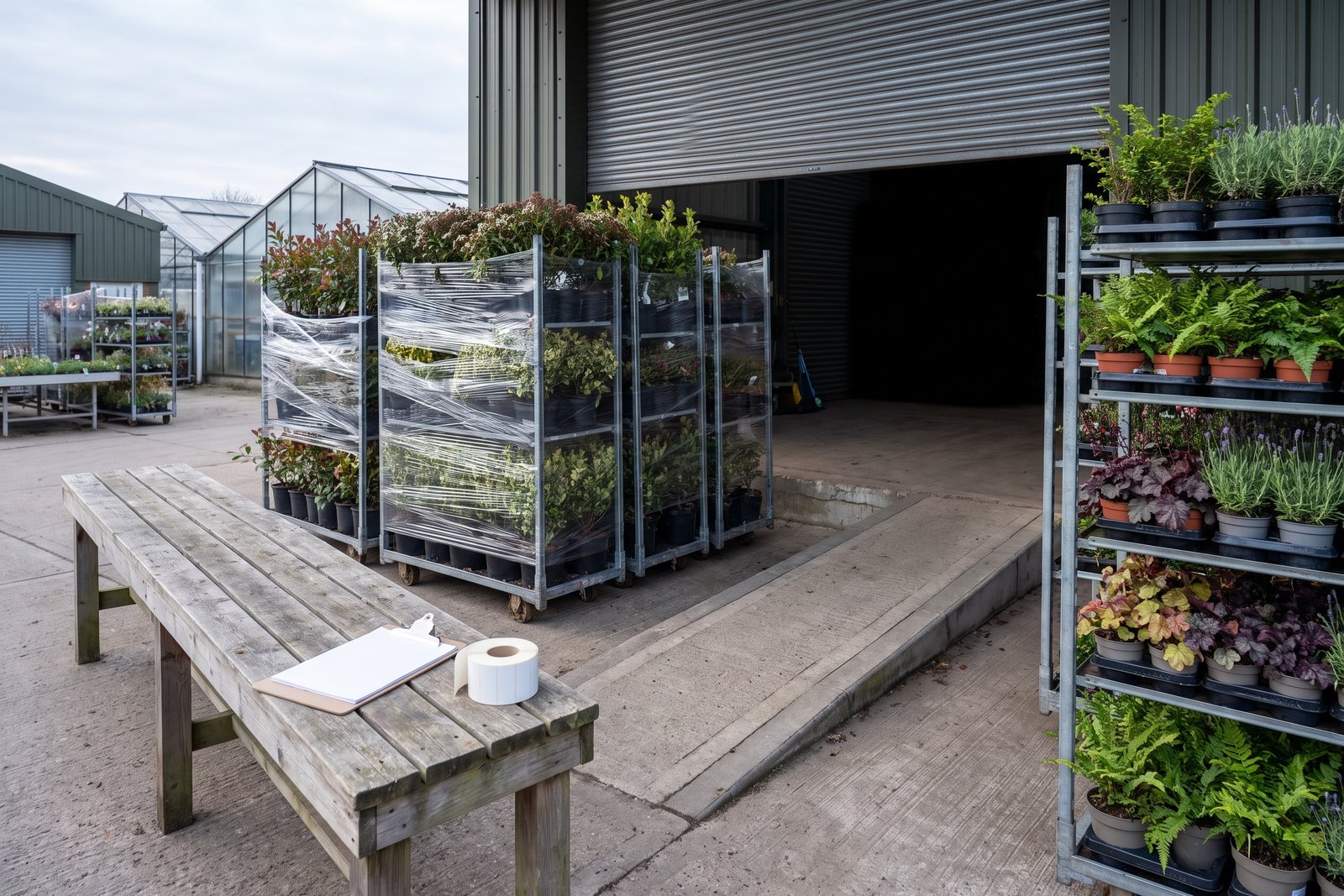
Every consignment of plants that moves between businesses in Great Britain carries a UK plant passport, and a buyer sits at the end of that chain. This page explains what the passport is and who issues it, what a buyer should expect and keep, how imported plants are checked, the rules on oak, the Northern Ireland position and Plant Healthy.
Bare-Root Season in the UK: What Growers List and When
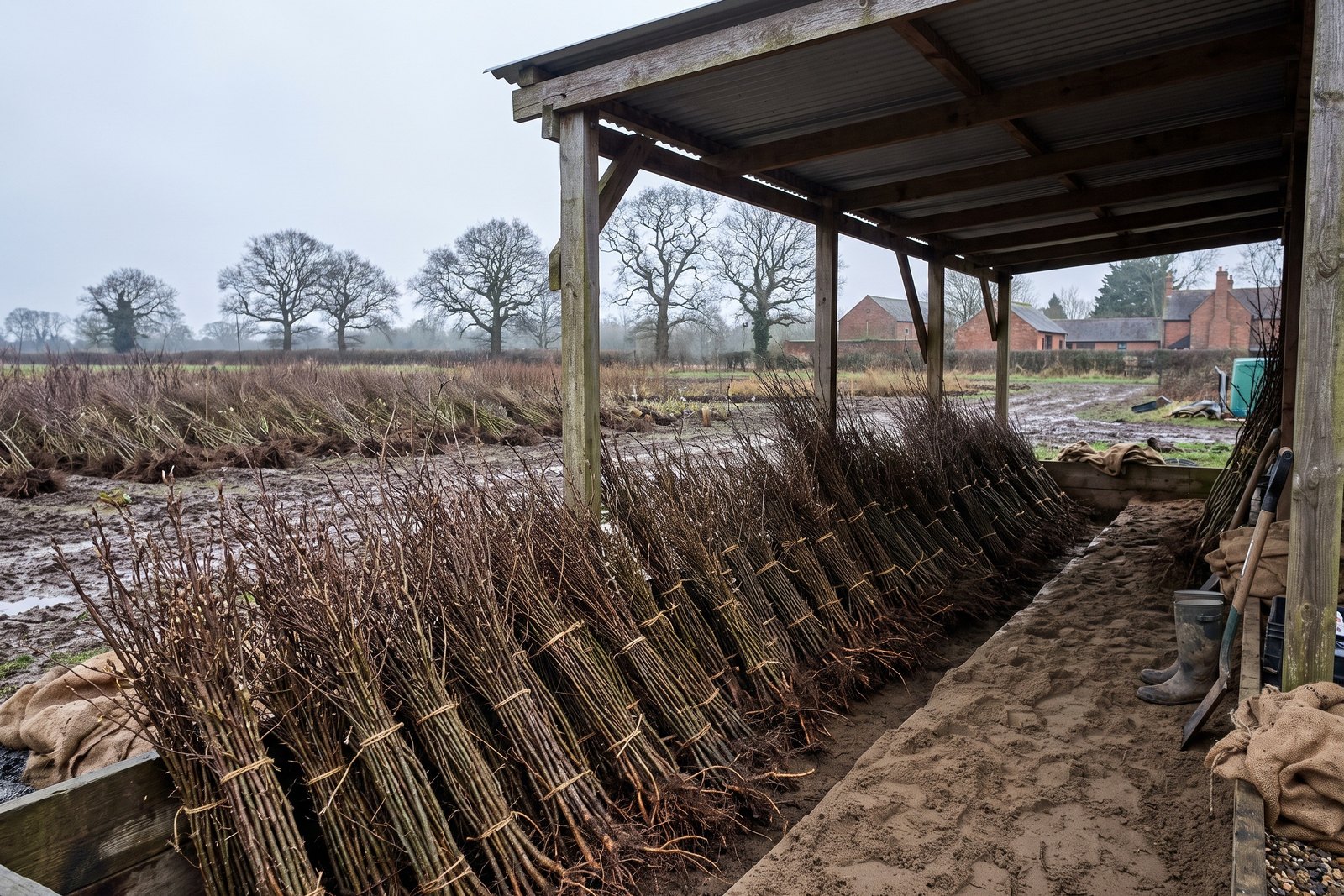
From November to March British nurseries lift deciduous trees, hedging, roses and fruit from open ground and sell them bare-root at a fraction of the container price. This page explains what is sold this way, the height, girth and transplant codes on a list, how the season runs and how the plants are handled.