How Wholesale Plant Pricing and Availability Work in the UK Trade
A trade price is per plant, per size, ex VAT and ex carriage, and the weekly availability list says what can be had now. This page explains how the UK nursery trade is shaped, how a price is built, what the list's columns mean, the size ladder, why prices have moved and how to open an account.
Updated 20 October 2026. Grower totals from the live uk.hortosapp.com county pages on 20 October 2026; this page quotes no HortOS price figure, because growers are still adding their lists.
On this page
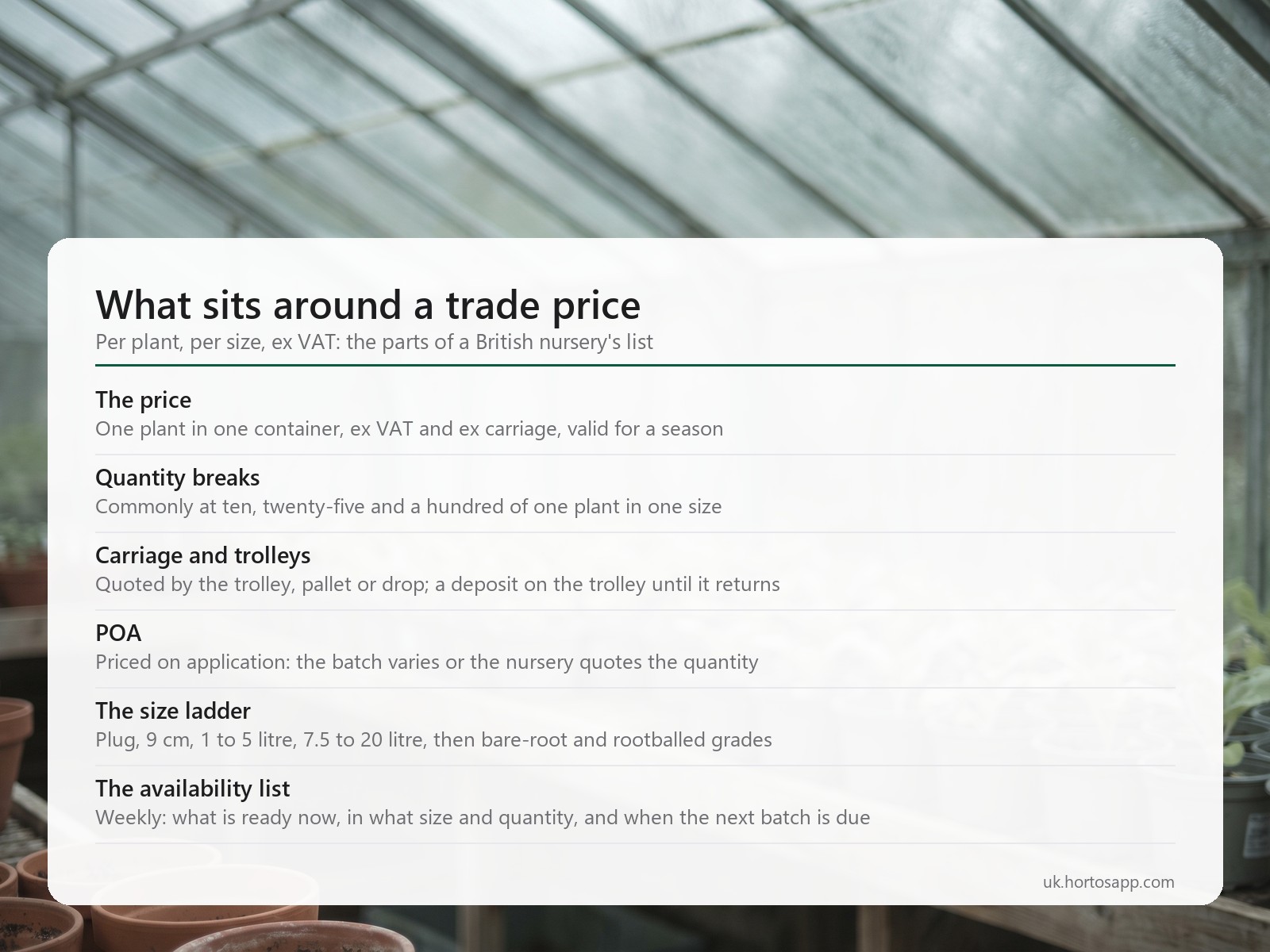
A trade price list from a British nursery looks simple: a plant, a pot size, a price. The surprises come from what is not printed. The price is ex VAT and ex carriage, it holds for a season, it steps down at quantity breaks, it refers to a grade that the trade understands without saying, and the plant may not be there next week. The availability list, a separate document that changes weekly, is the one that says what can be had now. Reading the two together is the skill.
This page explains how the UK's nursery trade is shaped, how a trade price is built, what an availability list says and leaves out, the sizes and grades the prices refer to, why prices have moved in the last few years, and how a buyer opens an account. It draws on HortOS, a free directory of wholesale plant growers in the United Kingdom, listed by county, to which each grower adds its own availability and trade prices, and on what the government's horticulture statistics, the plant health rules and the trade's own bodies publish. It quotes no HortOS price figure, because growers are still adding their lists to the UK site.
Quick facts
| The trade | The government valued UK ornamental production at 1.6 billion pounds in 2025, hardy nursery stock at 1.1 billion of that, pot plants at 347 million and flowers and bulbs at 158 million. Imports of ornamentals were worth a further 1.6 billion pounds. |
|---|---|
| A trade price | Per plant, for a stated pot or grade, ex VAT, ex carriage, usually with quantity breaks and a validity period. POA means the price depends on the batch and the quantity. |
| An availability list | A weekly sheet of what is ready now: plant, size, grade, quantity, sometimes a ready date for the next batch. It changes as the week's orders are picked. |
| The sizes | Plugs and nine centimetre pots, then one, two, three, five and ten litre pots, then larger containers, rootballs and bare-root grades by height or girth. The same plant costs several times more three sizes up. |
| Why prices moved | Energy, labour, growing media and transport all rose; peat-free production costs more at first; imported plants face plant health checks at the border since 2024. |
| Accounts and terms | A new buyer pays in advance or on a card. An account with thirty days' credit comes after a few orders and references. |
The shape of the UK trade
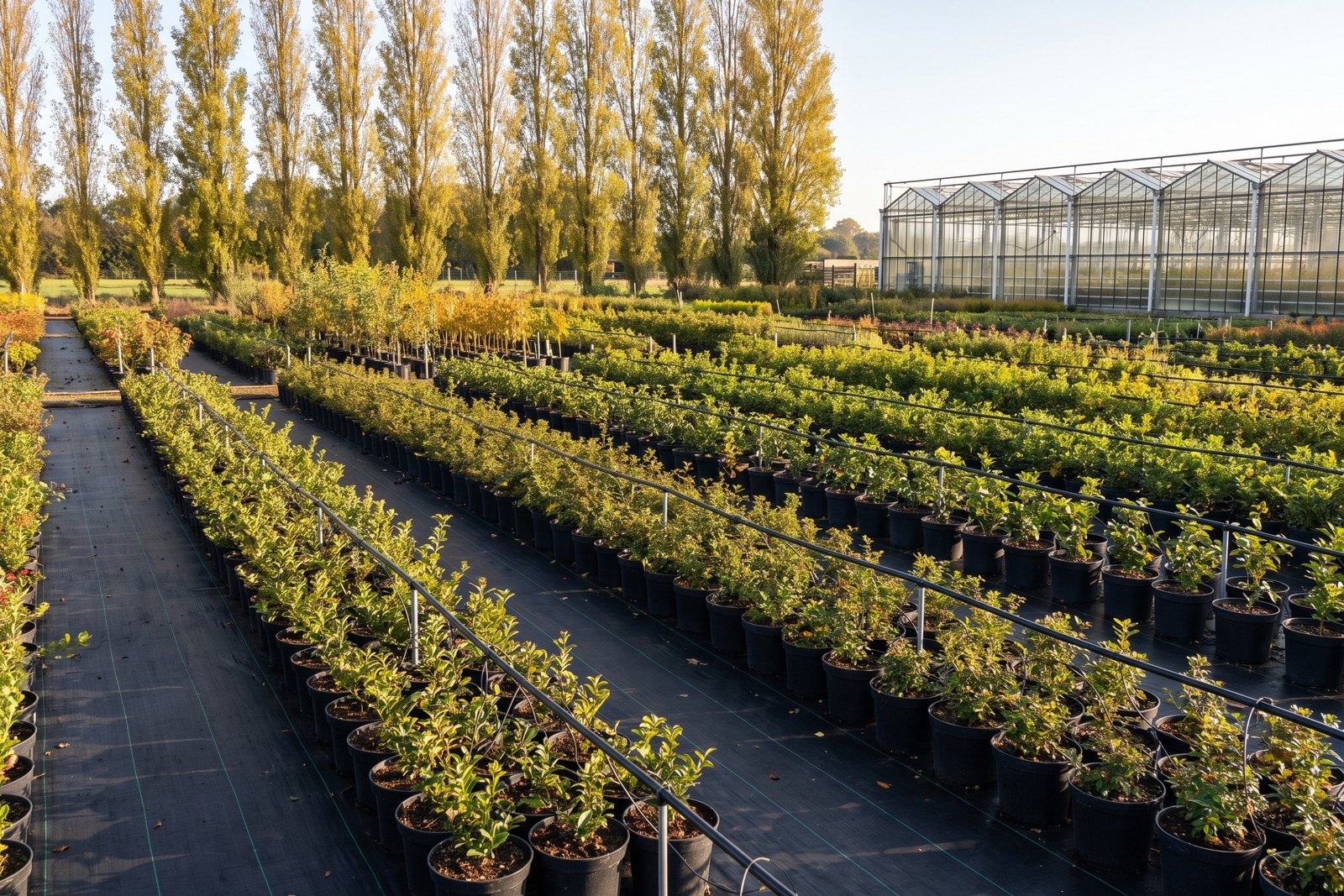
The Department for Environment, Food and Rural Affairs counts the trade each year. Its horticulture statistics for 2025 put the value of UK ornamental production at 1.6 billion pounds, two per cent down on 2024. Hardy ornamental nursery stock, the trees, shrubs, hedging, perennials and climbers that landscape and garden plantings are built from, was the biggest part at an estimated 1.1 billion pounds. Pot plants were worth 347 million and flowers and bulbs 158 million. Imports of ornamentals rose to 1.6 billion pounds in the same year, and exports were worth 59 million.
Two things in those figures shape every price list. The first is that imports are as large as home production. A plant on a British trade list may have been grown in Lancashire from a cutting struck in the Netherlands, bought in as a young plant and grown on. The Royal Horticultural Society says the industry relies on overseas young plants for about sixty per cent of its needs. The second is that the trade is many small and medium growers rather than a few large ones, each with its own list, its own terms and its own strengths. A hedging nursery, a tree nursery, a herbaceous nursery and a bedding grower are four different businesses with four different calendars.
How a trade price is built
A nursery prices a plant from what it cost to produce or buy in, the time it has spent on the bench, the losses in the batch and the season it is sold in. The list price is for one plant in one container at the quantity breaks printed, typically one to nine, ten to twenty-four, twenty-five to ninety-nine and a hundred or more. The breaks reward an order that clears a bench. The price is ex VAT, which a VAT registered grower adds at 20 per cent on the invoice, and ex carriage, which is quoted by the trolley, the pallet or the drop.
A price list holds for a season, usually from autumn to the following summer, and a nursery that changes it mid-season says so. POA against a line means the plant is priced on application: the grade varies, the batch is small, or the nursery wants to quote the quantity rather than print a figure a competitor can read. Trees above a certain girth, semi-mature specimens and anything contract grown are usually POA.
Three charges sit beside the plant price. Carriage, which depends on distance and whether the drop fills a trolley or a lorry. The trolley or pallet itself, charged as a deposit or a hire fee until it is returned. And, on some lists, a small order surcharge below a minimum value. A buyer compares two nurseries on the delivered, ex VAT price of the whole order, not on the plant price alone.
What an availability list says
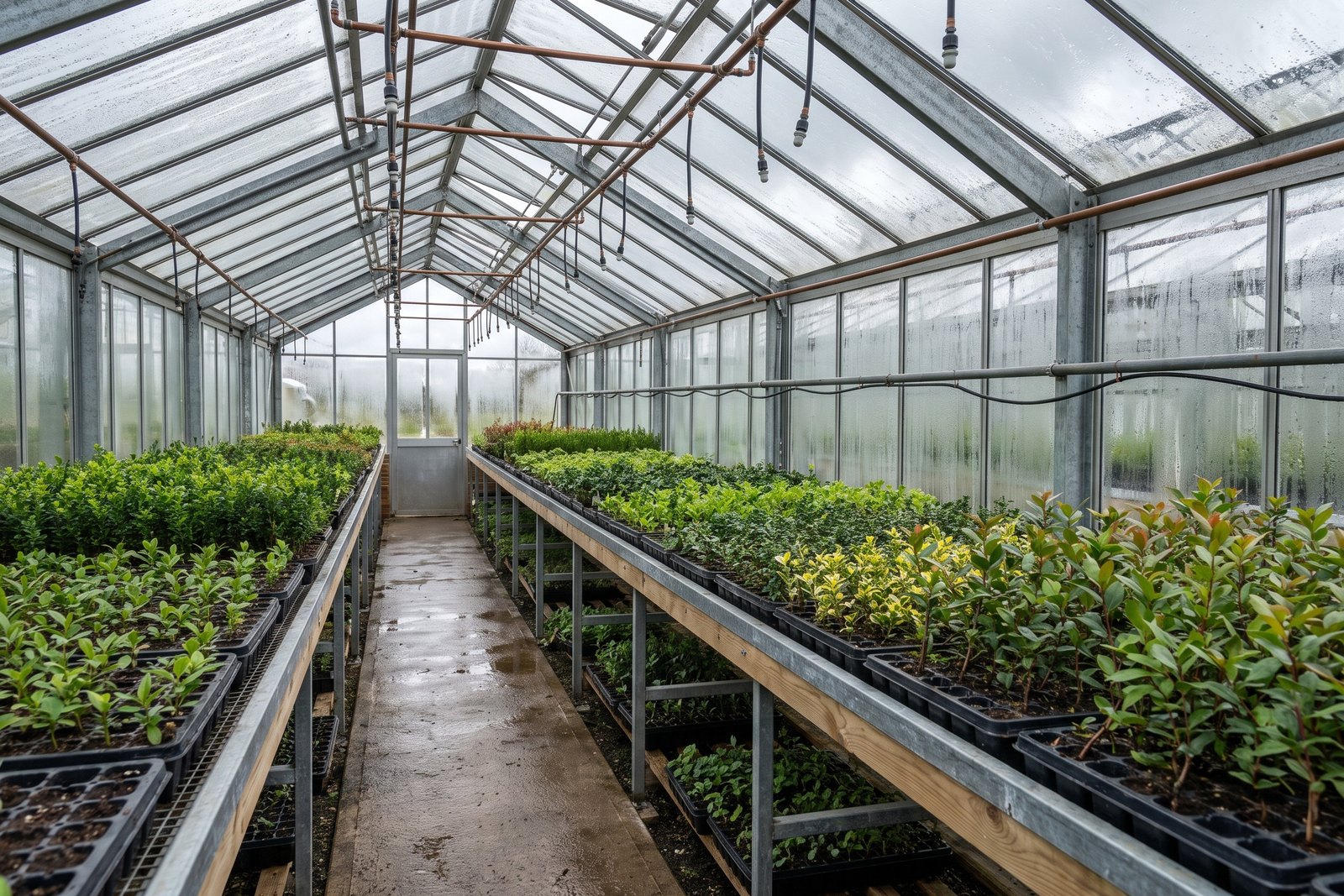
The availability list is the working document. Most nurseries send one by email every week or two during the season, and the larger ones publish it on their websites or through the trade's ordering systems. It lists what is ready to go now, which is a different thing from the catalogue of what the nursery grows. A plant that is in the catalogue and not on the availability list is between batches, sold out or not yet at the grade the nursery sells at.
| Column | What it means | What to check |
|---|---|---|
| Plant | The botanical name, sometimes with a cultivar | That it is the species or cultivar your plan names, not a close relative |
| Size | The pot in litres, or the height or girth of a field grown plant | That the size matches the plan; a 3 litre and a 5 litre of the same shrub are different jobs |
| Grade | A height band, a number of breaks, a stem form | A tree sold as a standard has a clear stem; a feathered tree does not |
| Quantity | How many are ready this week | A quantity smaller than your order means a split delivery or a substitution |
| Ready | A week number or month for the next batch | A plant promised for week 18 is not in the ground by Easter |
| Price | Ex VAT, at the break your quantity reaches | Whether the list price or a quoted price applies, and whether carriage is extra |
Two habits make the list useful. Read it the day it arrives, because the quantities fall as the week's orders are picked. And ask for the next list before the planting is designed, because a design built on last year's list is a design built on plants that may have been sold. Buying plants in bulk for a community group in the UK shows how a group turns a plan into an order the list can fill.
The sizes and grades the prices refer to
British lists use a ladder of container sizes in litres for container grown plants and a set of trade grades for field grown ones. The ladder matters because the price rises steeply with it: the same shrub costs a few pounds in a two litre pot and several times that in a ten litre, and the ten litre is not five times the plant. For most plantings the smaller size, planted densely and given a season, catches up.
| Form | Grades and sizes | What it is for |
|---|---|---|
| Plug | Cell trays of 84 to 126; also 'mini' and 'jumbo' plugs | Bedding, wildflower meadows, ground cover sown in numbers |
| Liner, 9 cm, 1 litre | Young plants, usually sold by the tray | Perennials and herbs to grow on or plant densely |
| Container, 2 to 5 litre | The working sizes for perennials and shrubs | Borders, mass planting, hedges that must show in year one |
| Container, 7.5 to 20 litre | Specimen shrubs, small trees, climbers on frames | Focal plants, instant screening, courtyard planting |
| Bare root | Whips 40/60, 60/80, 80/100 cm; transplants coded 1+1, 1u1; trees by girth | Hedging, woodland, orchards and street trees from November to March |
| Rootballed | Field grown, lifted with soil in hessian and wire | Evergreen hedging and larger trees in autumn and spring |
Trees carry their own vocabulary: standards and selected standards, heavy and extra heavy standards, and semi-mature trees, all graded by the girth of the stem in centimetres measured a metre from the ground. Street and park trees: what UK growers supply explains the tree grades, and Bare-root season in the UK the transplant codes.
Why prices have moved
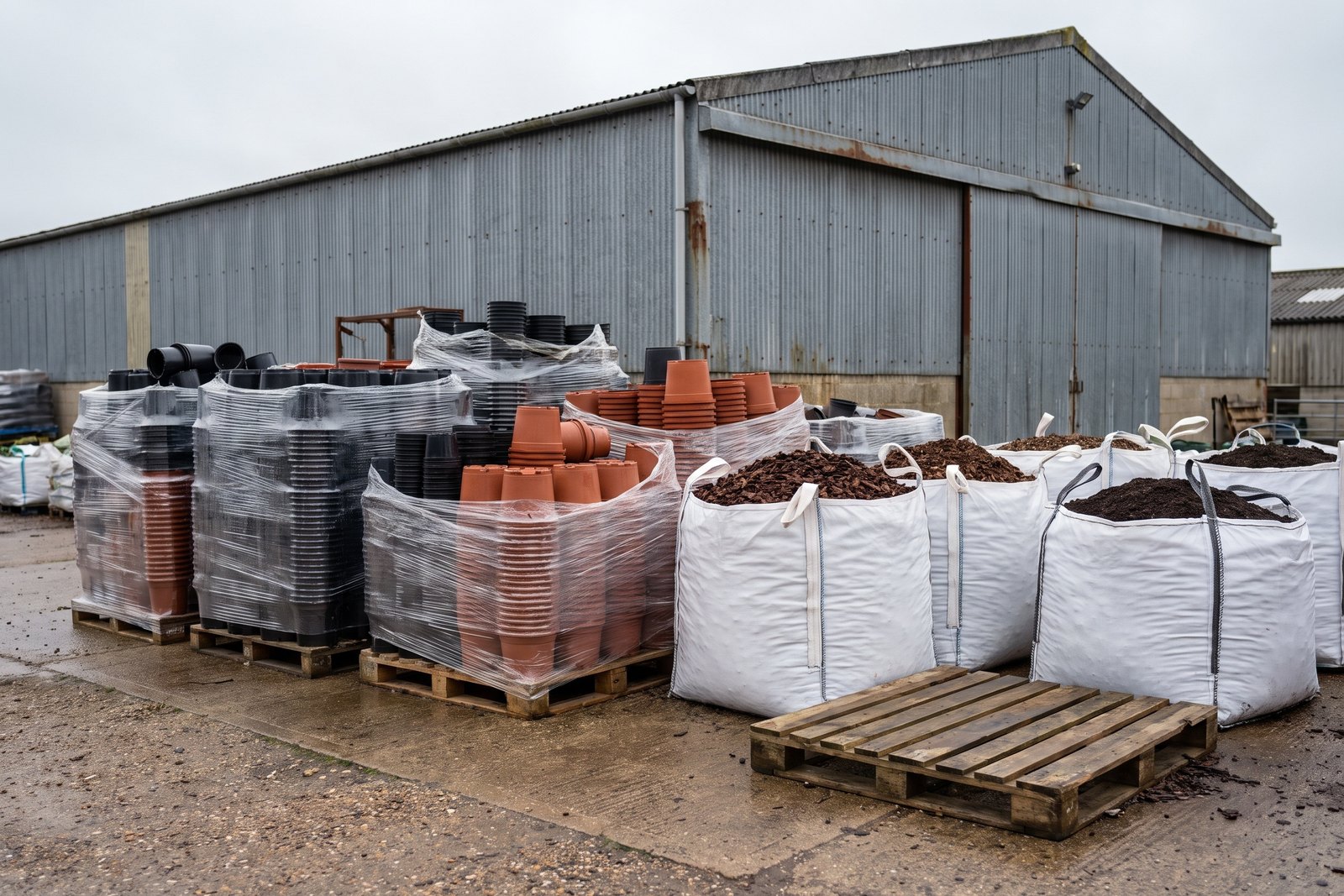
The government's own commentary on 2025 names the pressures: higher labour, energy and input costs, pots, growing media, plant protection products, fuel and transport, set against uneven retail demand in a hot, dry season. Growers who held prices in 2023 and 2024 moved them in 2025, and container grown stock in particular is dearer than it was before the pandemic. Two changes of the trade's own add to it. The move away from peat means new growing media, new watering regimes and, for a while, higher losses. And since 2024 plants imported from the European Union have moved under the Border Target Operating Model. The higher risk categories need a phytosanitary certificate from the exporter, a notification before arrival and checks at a border control post, each of which adds cost and time to an imported plant.
The practical consequence for a buyer is that a price from two years ago is no guide, and a price list from last season should be treated as a draft until the nursery confirms it.
Opening an account and the terms you will meet
A nursery that has never dealt with you will ask for payment with the order, by card or bank transfer, or a pro forma invoice paid before despatch. After a few orders it may open a credit account with thirty days from the end of the month, against a form that asks for the business or organisation's details and sometimes two trade references. Landscape contractors, councils and garden designers hold such accounts as a matter of course; a community group, a school or a parish council can usually open one once the nursery knows who is paying.
The terms on the back of the list are worth reading once. They say when ownership passes, who bears the risk of a plant that dies in its first weeks, how long you have to report a short delivery, and what happens to trolleys that do not come back. Most British nurseries are reasonable about a planting that fails through no fault of the buyer; none is obliged to be.
Where to find the lists
The growers directory on HortOS lists more than 2,900 growers that sell plants to the trade across the United Kingdom, by county and town, and each grower controls its own listing, prices and delivery. The county pages (Lancashire, Lincolnshire, Cambridgeshire, Staffordshire) show the nurseries near a site. Growers are being added now, and lists and trade prices appear as each grower sends its own. Anyone can read the pages and only the trade can order. A buyer with a plant list writes to the nurseries in the nearest counties, asks for the current availability list and the trade terms, and compares the delivered price. On 20 October 2026 the county pages listed 199 in Lancashire, 153 in Lincolnshire, 149 in Cambridgeshire, 144 in Staffordshire, 136 in Norfolk and 133 in Cheshire.
What to watch for
- A price without a size. The same plant exists at four prices on one list; a quote that names the plant and not the pot is not a quote.
- An old list. Ask the date of the availability list you are reading and whether the prices on it still hold.
- Carriage left out of a comparison. A nearer nursery with a dearer plant is often the cheaper order once the lorry is counted.
- Substitutions. Say in writing whether a similar plant may be sent when a line sells out, and which lines must not be changed.
- A single supplier for a whole scheme. Few nurseries grow everything; a tree nursery, a hedging nursery and a herbaceous nursery may serve one planting better than one general list.
- Grades read loosely. A 60/80 whip and an 80/100 whip, or a 10 to 12 and a 12 to 14 girth tree, are different plants at different prices.
Getting it right
- Ask for the current availability list and the trade terms before the planting is designed, and design from what is listed.
- Specify every line by botanical name, size or grade and quantity, and ask for ex VAT prices with carriage shown separately.
- Choose the working sizes, two to five litres for shrubs and perennials and bare-root grades for hedging and trees, unless a plant must look established on day one.
- Compare nurseries on the delivered price of the whole order, and count the trolley or pallet charges.
- Confirm the quantity breaks your order reaches, and consider adding a few plants to reach the next one.
- Agree substitutions, the delivery week and the returns of trolleys in writing before the order is placed.
A word of caution
This page describes how the trade commonly works, not the terms of any grower. Every nursery sets its own prices, breaks, carriage, credit terms and conditions of sale, and its written quote and terms replace anything summarised here. The government's figures are national estimates and say nothing about the price of a particular plant. HortOS publishes no median trade price for the United Kingdom yet; where a grower's own price appears beside its line on the site, that is the grower's price and the grower's to change.
Sources
- Department for Environment, Food and Rural Affairs, Horticulture statistics 2025: the value of UK ornamentals.
- GOV.UK, import plants and plant products from the EU to Great Britain: the border checks on imported plants.
- Royal Horticultural Society, RHS retail peat-free from January 2026: where young plants come from.
- Horticultural Trades Association: the trade's own body.
- British Association of Landscape Industries: the landscape contractors' body.
More guides
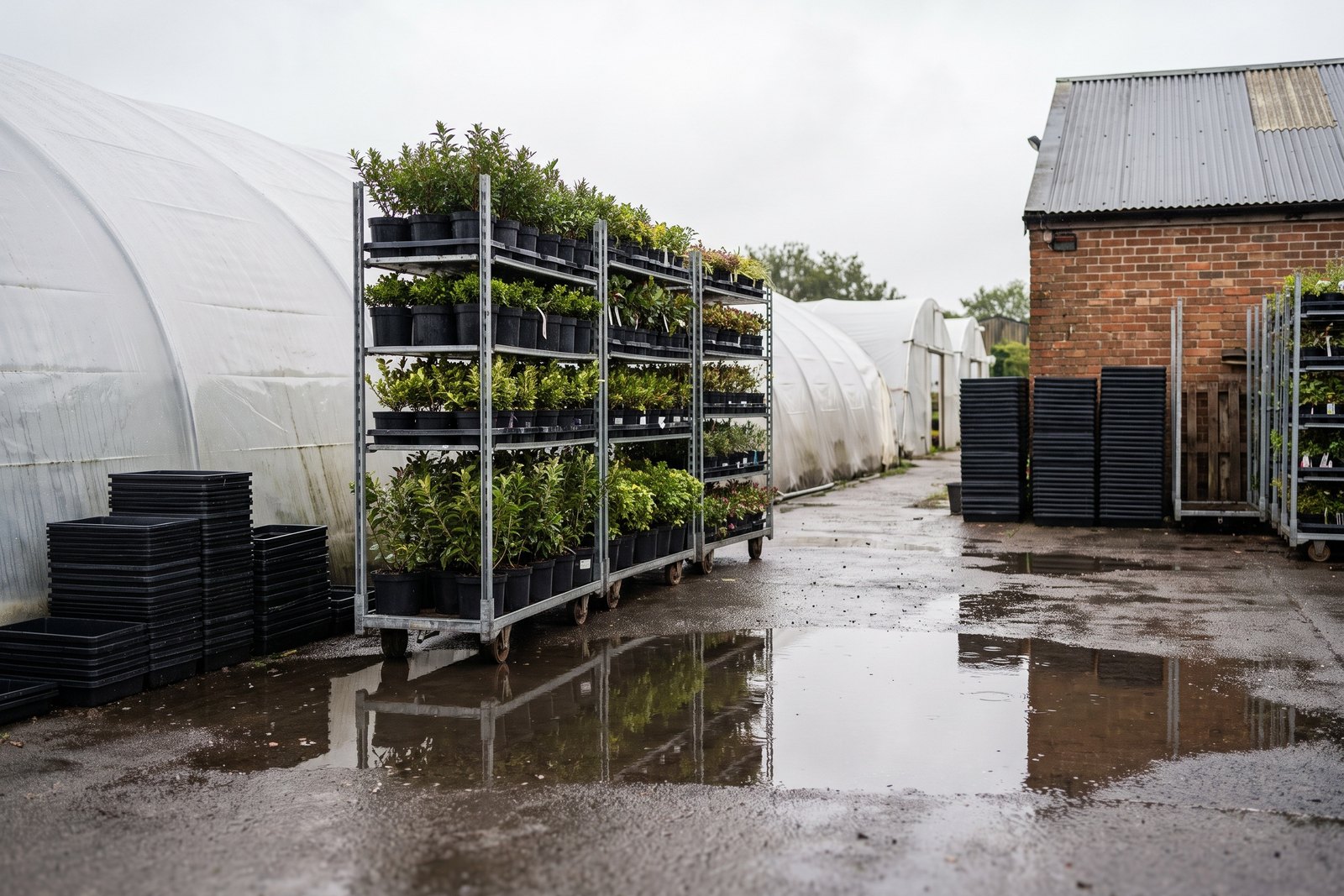
Buying Plants in Bulk for a Community Group in the UK
Garden societies, allotment associations, schools and In Bloom groups can buy plants by the tray, trolley and bundle from British wholesale nurseries when they order like the trade. This page explains what bulk means to a nursery, the three ways a group buys, how a plan becomes quantities, how VAT falls and what happens on delivery day.
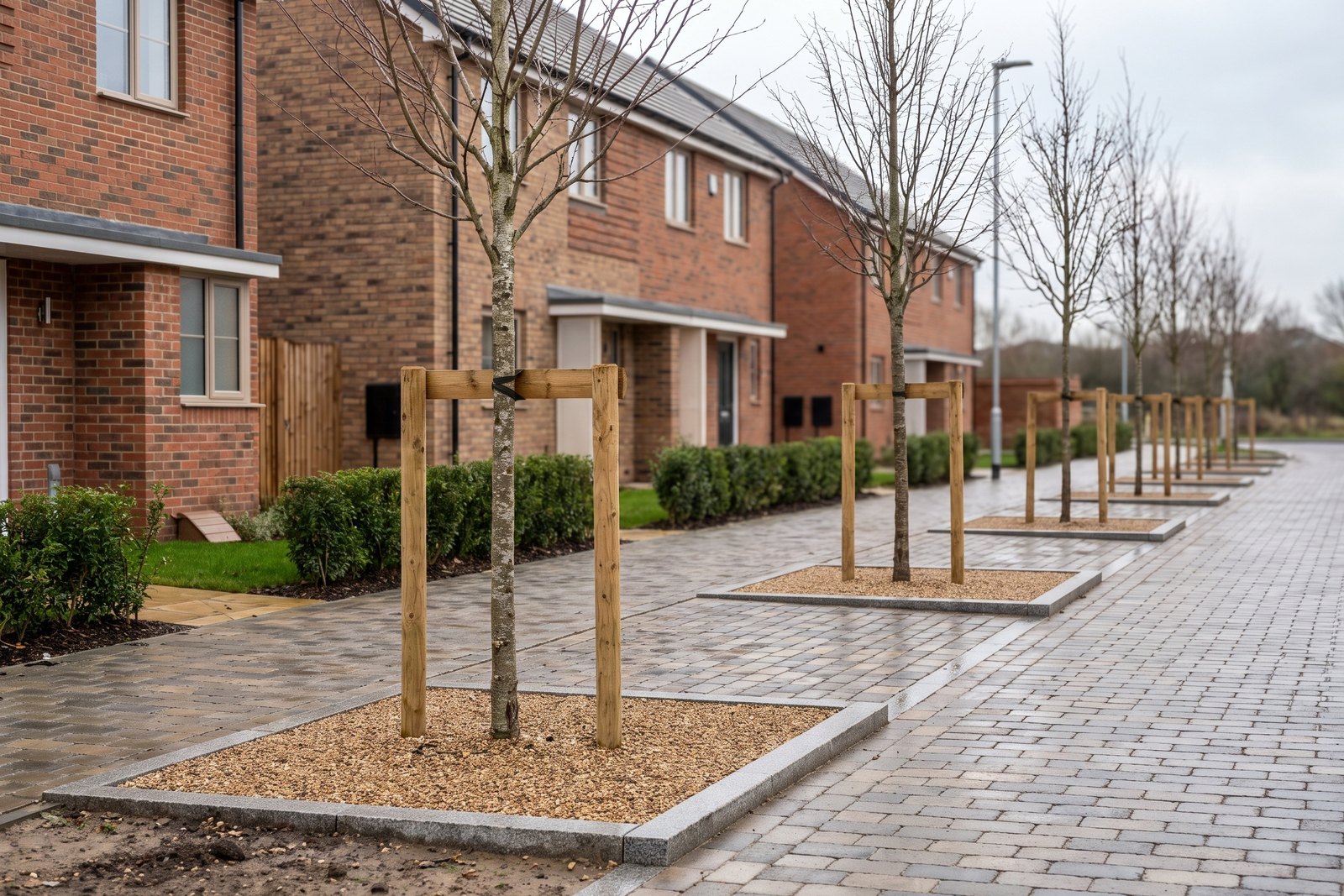
Street and Park Trees: What UK Growers Supply and How to Specify Them
A street tree is bought a season before it is planted and judged thirty years after. This page sets out the grades and forms British tree nurseries supply, the standards and guides a specification rests on, how trees are specified and reserved, the duty to consult before felling a street tree in England and where the money has come from.
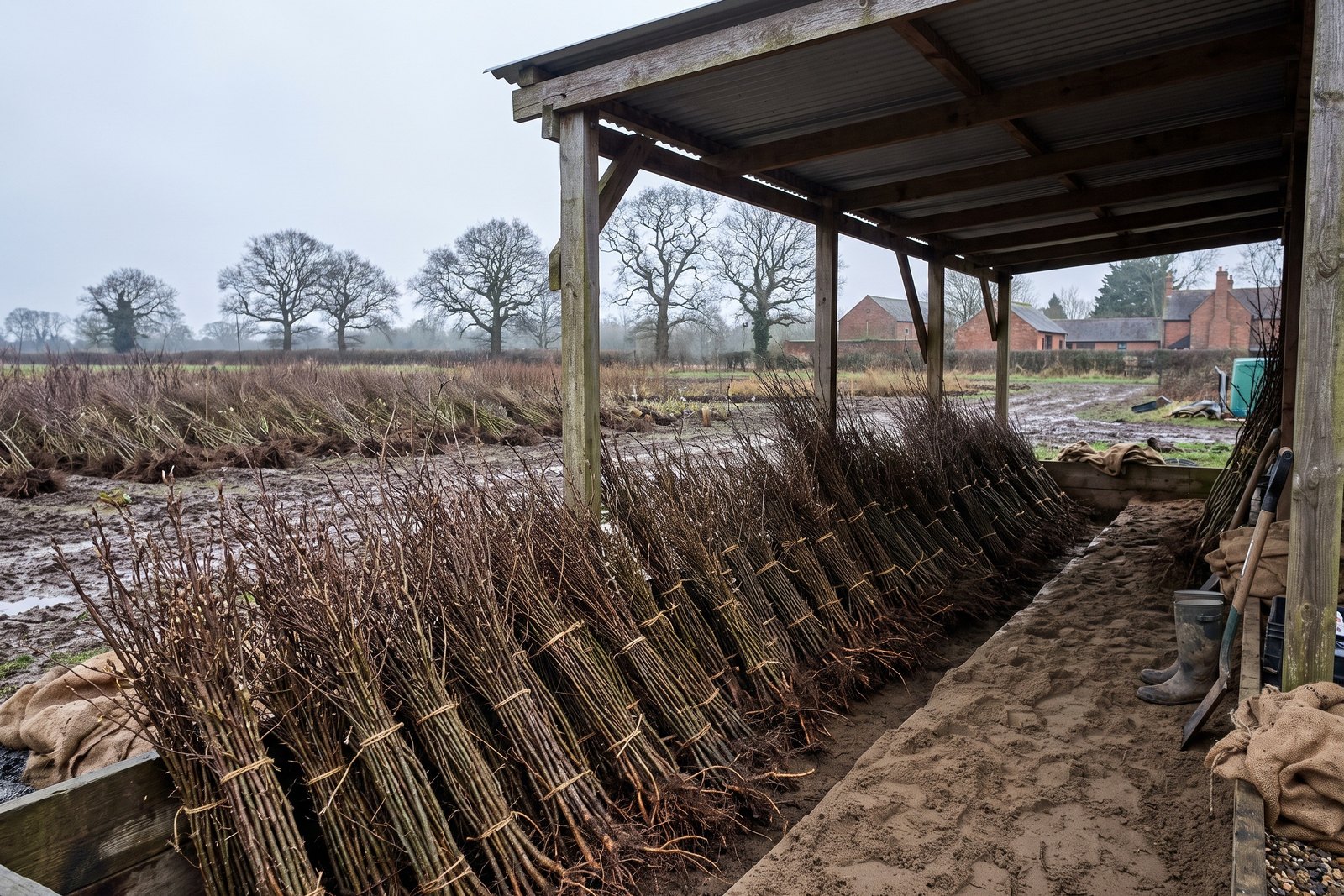
Bare-Root Season in the UK: What Growers List and When
From November to March British nurseries lift deciduous trees, hedging, roses and fruit from open ground and sell them bare-root at a fraction of the container price. This page explains what is sold this way, the height, girth and transplant codes on a list, how the season runs and how the plants are handled.