Hedging Plants for UK Gardens, and Who Grows Them
The same hedge can cost five times as much in pots in May as bare-root in December. This page sets out the hedging plants British growers list for native, formal, evergreen, screening and coastal hedges, the forms and grades they come in, how many a metre and when to plant, what has replaced box and the law on cutting.
Updated 27 October 2026. Grower totals from the live uk.hortosapp.com county pages on 27 October 2026; this page quotes no HortOS price figure, because growers are still adding their lists.
On this page
A hedge is the one planting almost every British garden, allotment site, school and churchyard has, and the one most often bought badly. The same beech hedge can cost five times as much in pots in May as it does bare-root in December. A box hedge planted today will meet the moth and the blight that have taken out so many. A native mix bought as a bag of one species is not a native hedge. The choices are simple once the forms, the spacings and the seasons are understood, and the nurseries that grow hedging are among the easiest in the trade to deal with.
This page sets out the hedging plants British growers list, in which forms and sizes, how many a metre to plant and when, what has replaced box, the law on cutting hedges that borders farmland and allotments, and where the hedging nurseries are. It draws on HortOS, a free directory of wholesale plant growers in the United Kingdom, listed by county, to which each grower adds its own availability and trade prices, and on what the Royal Horticultural Society, Hedgelink and the government publish. It quotes no HortOS price figure, because growers are still adding their lists to the UK site.
Quick facts
| The forms | Bare-root whips from November to March for deciduous and native hedging; rootballed plants in autumn and spring for yew, laurel and holly; container plants all year; instant hedging in troughs for a hedge that must be a hedge on day one. |
|---|---|
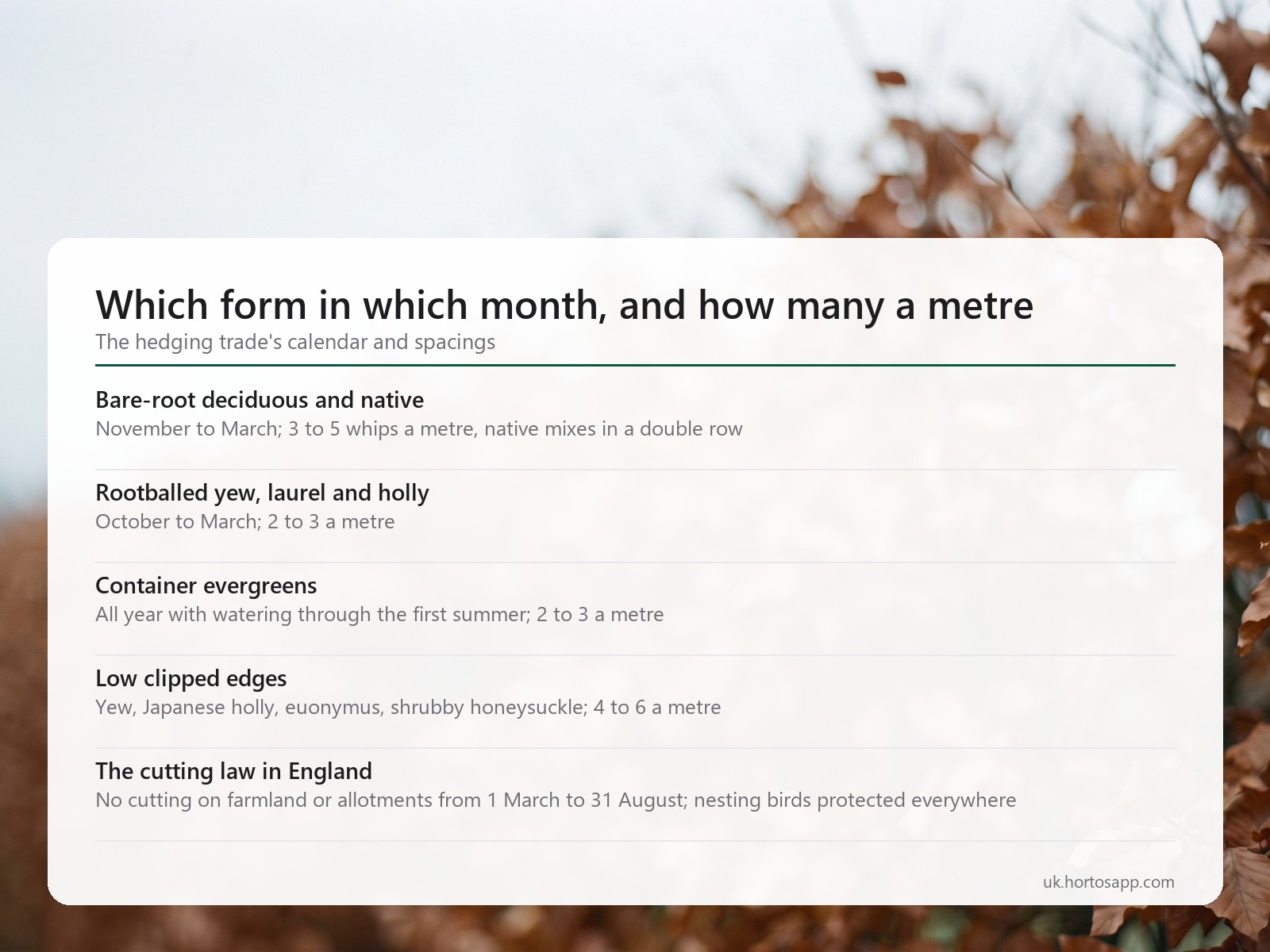
| How many a metre | The Royal Horticultural Society gives 30 to 60 centimetres between plants in the row, and for a hedge thicker than 90 centimetres a staggered double row 45 centimetres apart. Native hedges are commonly planted at five whips a metre in a double row. |
| When | Bare-root and rootballed plants go in while dormant, from November to March, avoiding frozen or sodden ground. Container plants go in at any time if they are watered through the first summer. |
| Box | Box blight and box tree moth have ended the box hedge in much of Britain. Growers list yew, Japanese holly, small leaved euonymus, shrubby honeysuckle and others in its place. |
| The law | On agricultural land and allotments in England a hedge may not be cut between 1 March and 31 August, with limited exceptions. Garden hedges are outside those regulations, but nesting birds are protected everywhere. |
| Who grows them | Specialist hedging nurseries in the Midlands, the North West and East Anglia, tree and forestry nurseries, and the general container nurseries for the evergreens. |
The hedges, and the plants they are made of
A hedge is chosen for its job. A boundary hedge wants to be dense, stockproof if there is livestock, and tolerant of the occasional hard cut. A formal garden hedge wants a small leaf, a tight habit and a slow enough growth to be cut once or twice a year. A screen wants height quickly and a plant that will take a wet or windy site. A wildlife hedge wants flowers, fruit, thorns and several species. The table lists the plants British growers commonly list for each, with the form they are usually sold in and the spacing the trade uses.
| Hedge | Plants growers list | Form and size | Plants a metre |
|---|---|---|---|
| Native mixed | Hawthorn as the bulk, with blackthorn, hazel, field maple, dog rose, guelder rose, spindle, crab apple | Bare-root whips, 40/60 or 60/80 cm | 5 in a staggered double row |
| Formal deciduous | Beech, hornbeam; purple beech for colour | Bare-root 60/80 to 100/125 cm; container 3 to 10 litre | 3 to 4; 2 rows for a thick hedge |
| Formal evergreen | Yew, holly, Portugal laurel, cherry laurel, privet | Rootballed 60/80 to 150/175 cm; container 3 to 20 litre | 2 to 3; yew often 2 |
| Low and clipped | Yew, Japanese holly, small leaved euonymus, shrubby honeysuckle, lavender for a soft edge | Container 9 cm to 3 litre | 4 to 6 for a knot or edge |
| Screening | Western red cedar, Leyland cypress, laurel, holly, hornbeam | Rootballed or container 100/125 cm and up | 1 to 2, by mature width |
| Coastal and windy | Griselinia, escallonia, elaeagnus, sea buckthorn, blackthorn | Container 2 to 5 litre; blackthorn bare-root | 2 to 3 |
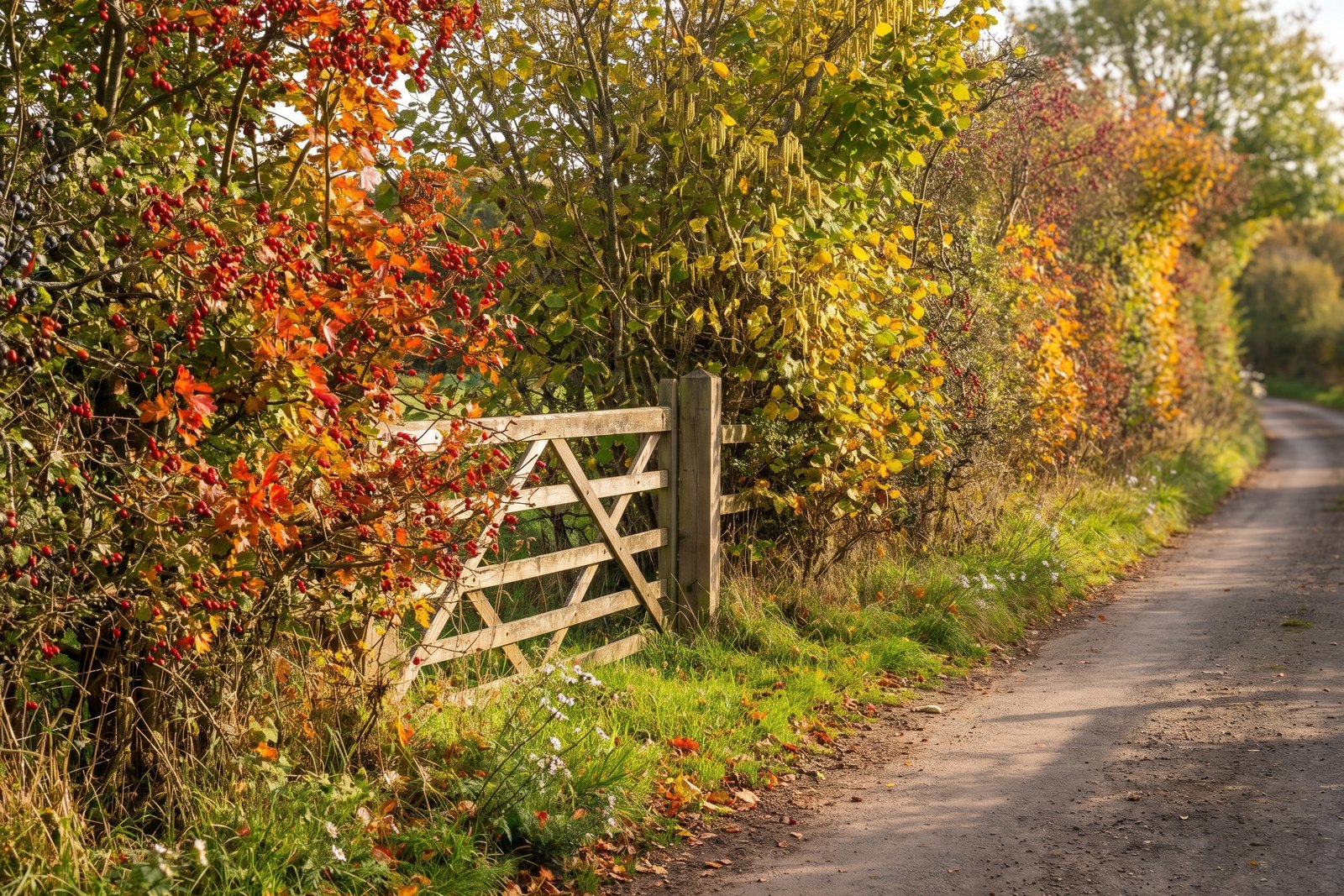
Hawthorn is the backbone of the native hedge for a reason: it is cheap, it is thorny, it takes any cut and it grows almost anywhere in Britain. Hedgelink's guidance for a wildlife hedge is a hawthorn based mix with four or five other species scattered through it, planted thickly and allowed to grow out before it is first cut. A buyer who asks a hedging nursery for a native mix for a particular county will get the proportions the nursery uses for that part of the country.
What has replaced box
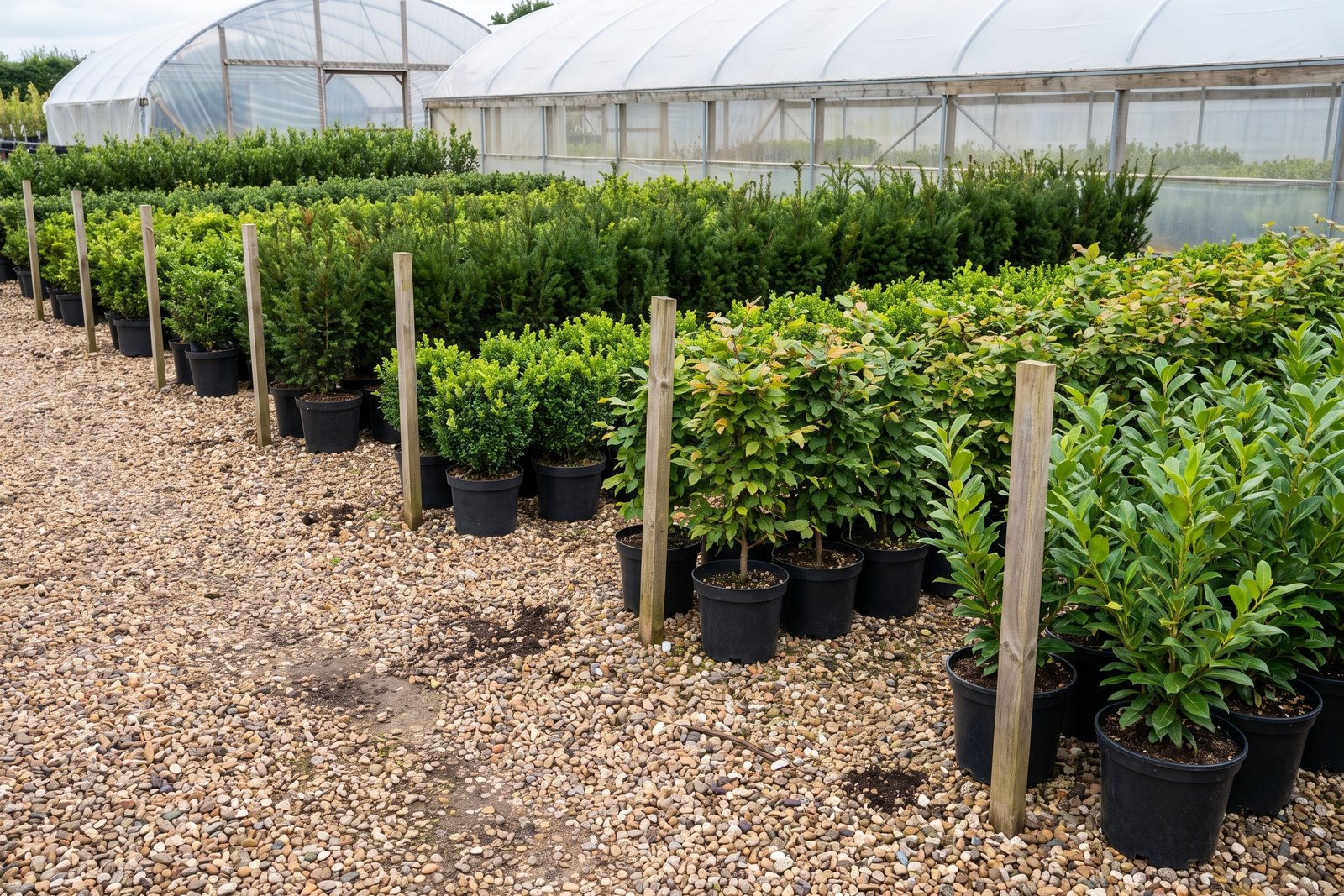
Two problems ended the box hedge as a safe choice. Box blight, a fungal disease, arrived in the 1990s and defoliates and kills clipped box in wet seasons. Box tree moth, a caterpillar that strips a plant in days, spread across southern England from 2011 and has reached most of the country. Growers still list box, and gardens in dry, airy sites still keep it, but few designers now specify it for a new hedge. The plants that have taken its place are the small leaved evergreens that clip well: yew, slow but unmatched for a formal hedge; Japanese holly, the closest in look; small leaved euonymus; shrubby honeysuckle for a quick, cheap edge; and, in a sunny well drained bed, lavender or rosemary for a soft one. A nursery that lists box will tell a buyer what it is selling in its place and how each one behaves in the buyer's soil.
Forms, sizes and the season
The cheapest hedge is a bare-root one. Deciduous hedging, native and formal, is grown in open ground, lifted while dormant and sold in bundles by height, in the grades 40/60, 60/80, 80/100 and 100/125 centimetres. The season runs from leaf fall in November to the swelling of buds in March, and the order books open in late summer. A whip in the 40/60 or 60/80 grade, planted thickly and cut back in its first spring, makes a better hedge than a taller one planted thinly. Bare-root season in the UK explains the grades and the handling.
Evergreens keep their leaves and lose water through the winter, so they are sold rootballed, lifted with a ball of soil wrapped in hessian and wire, from October to March, or in containers all year. Rootballed yew and laurel in the 100/125 and 125/150 grades are the usual way to plant a formal evergreen hedge that must look like one within two seasons. Instant hedging, grown in troughs a metre long and already clipped, is the dearest form and the only one that is a hedge on the day it is planted; it is a container plant that needs the same first summer of watering as any other.
Planting a hedge
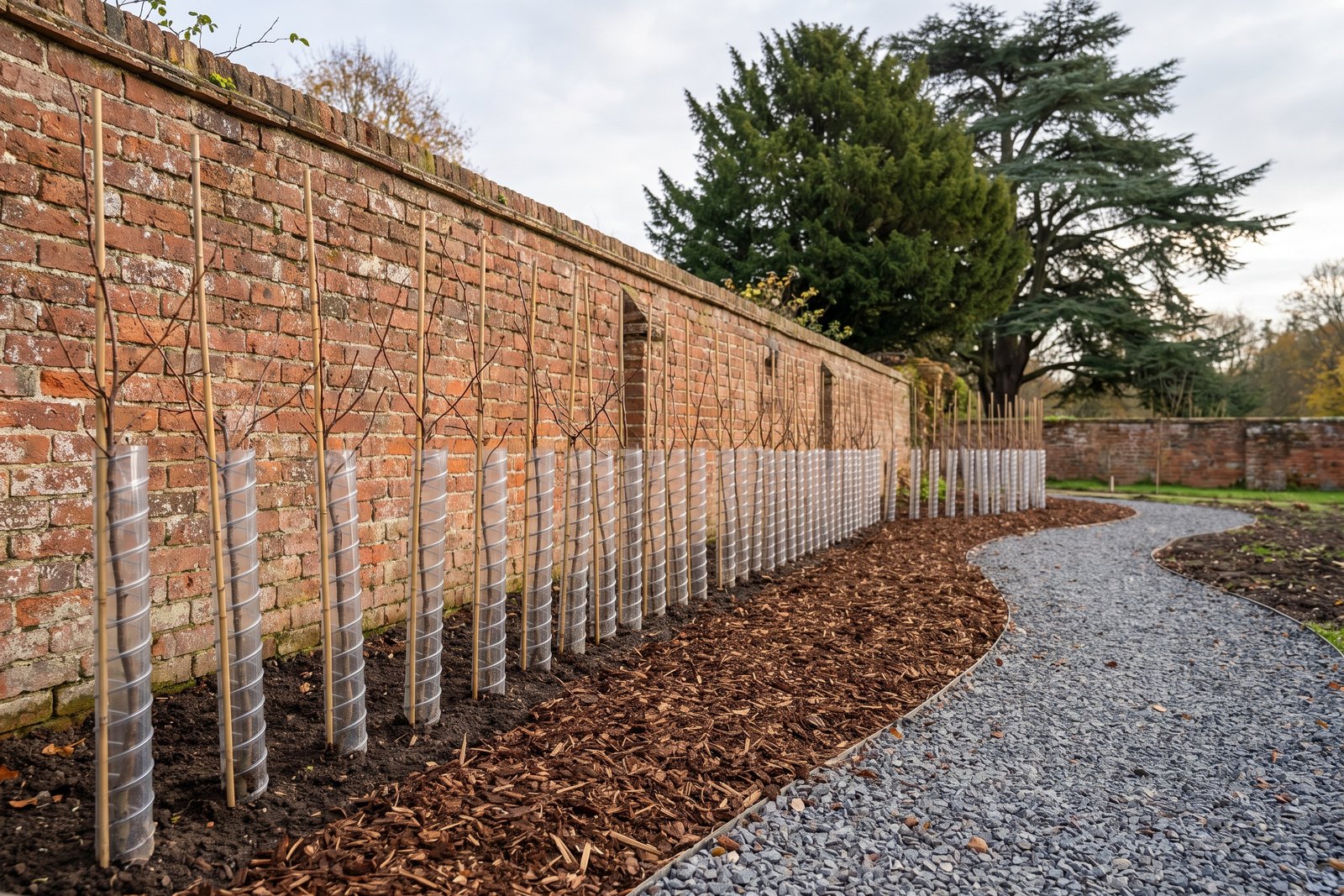
The Royal Horticultural Society's method is the trade's. Prepare a strip a metre wide, clear of grass and perennial weeds, and dig or fork it over. Set bare-root plants in a trench or in slits at the depth they grew in the nursery, 30 to 60 centimetres apart in the row depending on the plant and the thickness of hedge wanted, and for a hedge thicker than 90 centimetres plant a staggered double row with the rows 45 centimetres apart. Firm, water, and mulch the strip or lay a mat. Whips in rabbit country get spiral guards and canes. Cut deciduous whips back by a third after planting to make them branch from the base; leave evergreens to grow until they reach the height wanted, then trim the top.
The first summer decides the hedge. A newly planted hedge that is watered in a dry spring and kept free of grass for a metre on each side establishes in a year; one left to compete with turf takes three. Most of the failures a hedging nursery hears about are plantings that were never watered after March.
The law on cutting
Two rules bind the people who cut hedges. Everywhere in the United Kingdom, wild birds, their nests and their eggs are protected while they are nesting, so the trade avoids cutting any hedge from March to August unless it has been checked and found empty. In England, the Management of Hedgerows Regulations 2024 add a legal closed period for hedges on or next to agricultural land: no cutting or trimming between 1 March and 31 August inclusive, with limited exceptions, and a buffer strip two metres from the centre of the hedge that may not be cultivated or treated with fertiliser or pesticide. The government's guidance says the definition of agricultural land includes allotments, which are bound by the closed period and exempt from the buffer strip. Garden hedges are outside the regulations. Scotland, Wales and Northern Ireland have their own rules for farmland hedges, and a group managing a hedge there checks them.
A hedge that overhangs a highway or footpath may be cut back for safety at any time, which is the exception a parish council most often needs. Hedgelink publishes a management calendar and the case for cutting a hedge every two or three years rather than every autumn, which doubles the berries for birds and halves the cost.
Who grows hedging, and where
The growers directory on HortOS lists more than 2,900 growers that sell plants to the trade across the United Kingdom, by county and town, and each grower controls its own listing, prices and delivery. The county pages (Lancashire, Lincolnshire, Cambridgeshire, Staffordshire) show the nurseries near a site. Growers are being added now, and lists and trade prices appear as each grower sends its own. Anyone can read the pages and only the trade can order. Hedging comes from three kinds of nursery: the specialist hedging and forestry nurseries that lift bare-root whips by the hundred thousand, the tree nurseries that grow formal hedging in larger grades, and the general container nurseries that list the evergreens in pots. On 27 October 2026 the county pages listed 199 in Lancashire, 153 in Lincolnshire, 149 in Cambridgeshire, 144 in Staffordshire, 136 in Norfolk and 133 in Cheshire. Buying plants in bulk for a community group in the UK explains how a society or school places a hedging order.
What to watch for
- Box for a new hedge. Ask the nursery what it is selling in box's place and plant that.
- A native hedge of one species. Hawthorn alone is a hedge, not a wildlife hedge; ask for a mix of five or six.
- Tall whips planted thinly. Two rows of 60/80 whips at five a metre beat one row of 125/150 at two.
- Container hedging planted in June and left. It will need watering twice a week until autumn; budget the labour or wait for November.
- Cutting a farmland or allotment hedge in spring or summer. In England it is an offence between 1 March and 31 August, and nesting birds are protected everywhere.
- Leyland cypress near a neighbour. It grows a metre a year and the high hedges law lets a neighbour complain to the council about an evergreen hedge over two metres.
Getting it right
- Decide the hedge's job, then its plant, then its form: bare-root for deciduous and native, rootballed or container for evergreen.
- Measure the length, choose the plants a metre and the number of rows, and round up to whole bundles.
- Order deciduous and native hedging in late summer for a November or December planting; order evergreens for October or March.
- Prepare the strip before the plants arrive, and have guards, canes and mulch on site.
- Plant at nursery depth, firm, water, mulch, and cut deciduous whips back by a third.
- Water through the first spring and summer, keep a metre each side clear of grass, and cut outside the nesting season.
A word of caution
The spacings and grades on this page are the ones the Royal Horticultural Society and the trade commonly give, and a nursery's advice for its own plants on the buyer's soil replaces them. The law on cutting is described in general terms for England and as it stood on the date shown; farmland and allotment hedges in Scotland, Wales and Northern Ireland are under their own rules, and anyone cutting a hedge on agricultural land reads the current regulations and guidance first. Statements about pests and diseases are the authorities' and the Society's, and a plant's susceptibility on a particular site is for the grower to advise on.
Sources
- Royal Horticultural Society, hedges: planting: spacing, double rows and timing.
- Royal Horticultural Society, hedges: choosing and keeping a hedge.
- Hedgelink: the UK hedgerow partnership's guidance.
- GOV.UK, the Management of Hedgerows (England) Regulations 2024, regulatory approach: the cutting ban and buffer strips.
- The Management of Hedgerows (England) Regulations 2024: the regulations as made.
More guides
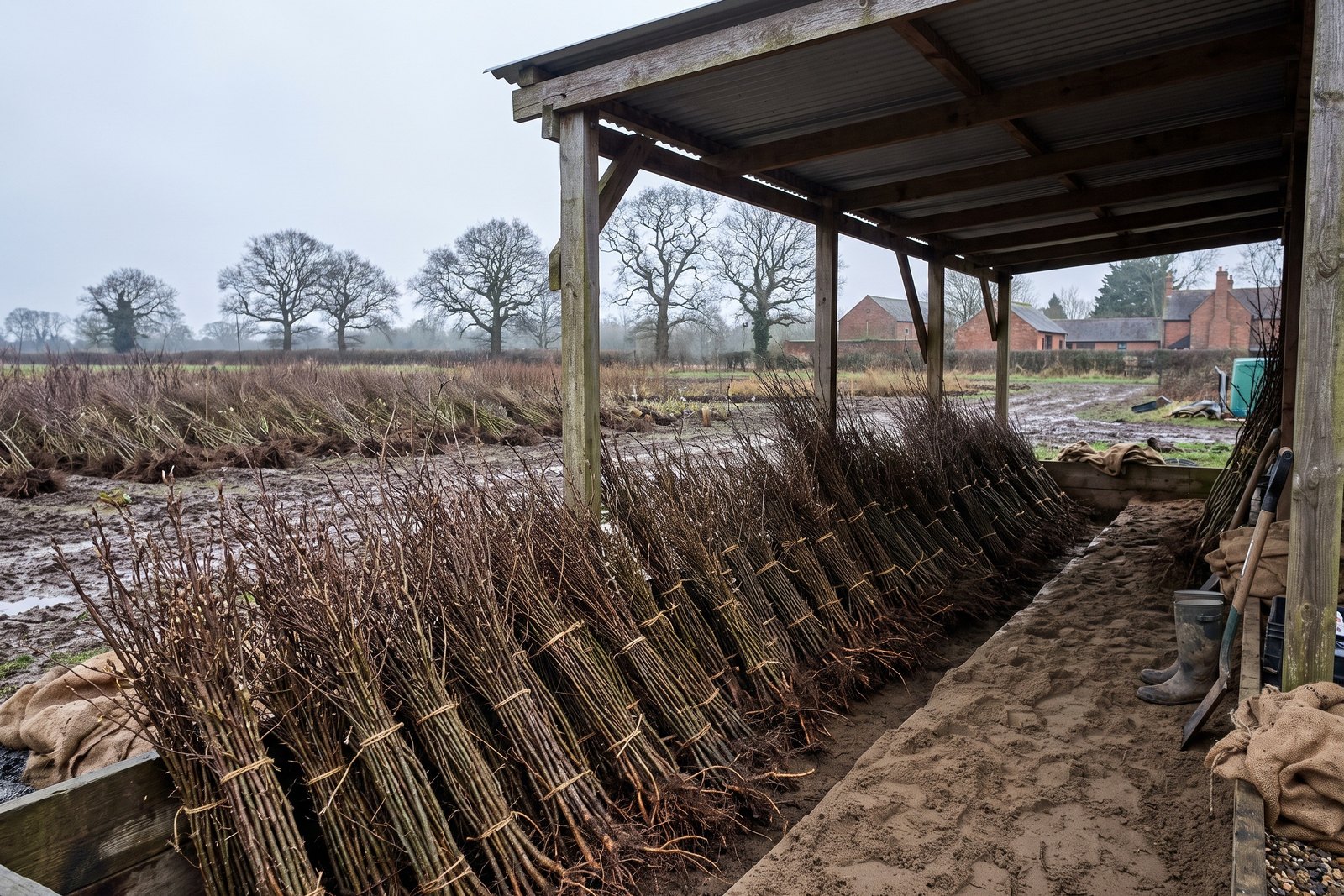
Bare-Root Season in the UK: What Growers List and When
From November to March British nurseries lift deciduous trees, hedging, roses and fruit from open ground and sell them bare-root at a fraction of the container price. This page explains what is sold this way, the height, girth and transplant codes on a list, how the season runs and how the plants are handled.
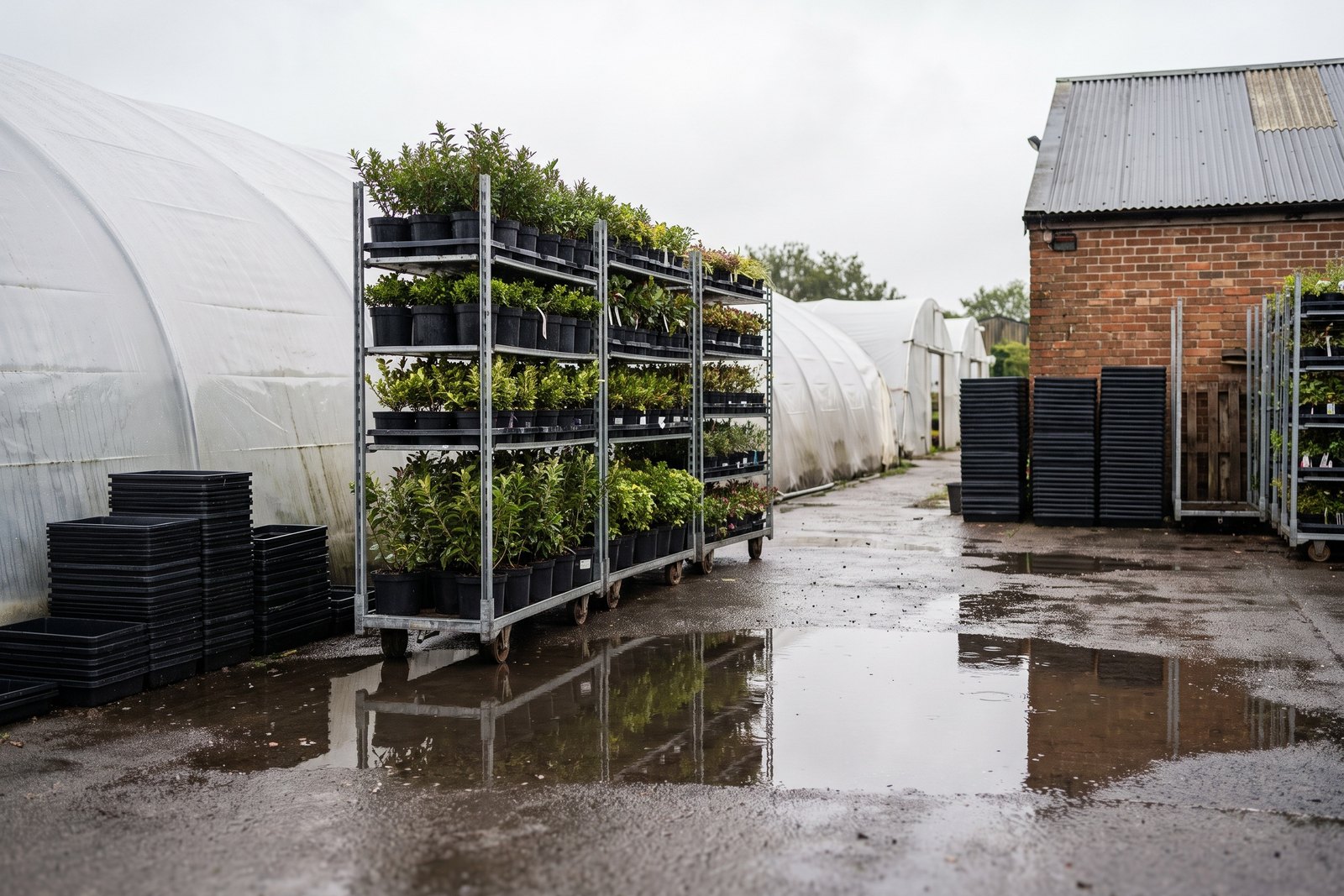
Buying Plants in Bulk for a Community Group in the UK
Garden societies, allotment associations, schools and In Bloom groups can buy plants by the tray, trolley and bundle from British wholesale nurseries when they order like the trade. This page explains what bulk means to a nursery, the three ways a group buys, how a plan becomes quantities, how VAT falls and what happens on delivery day.
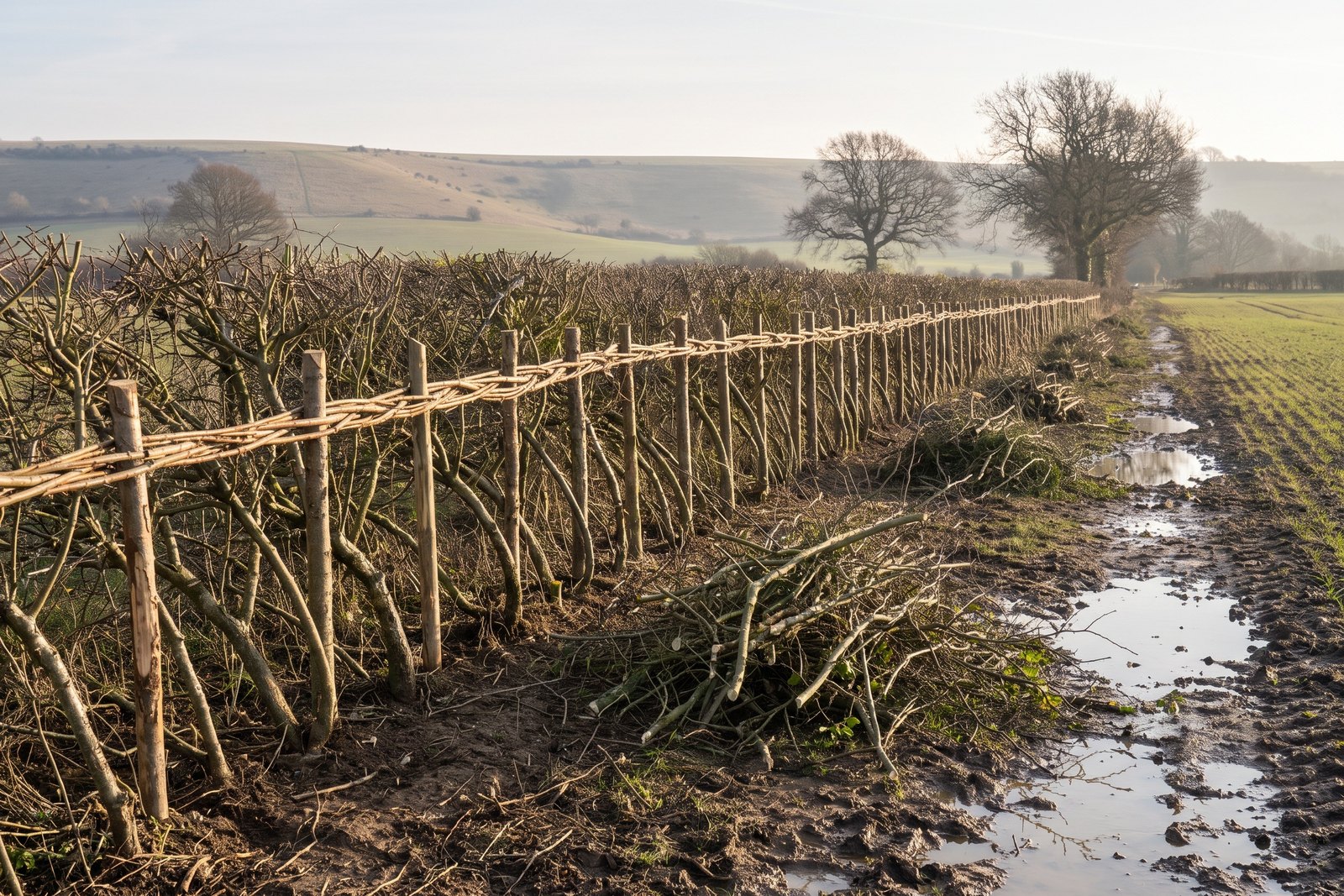
Hedge Laying: What It Does, When to Do It and What to Ask a Contractor
A guest article by a Kent hedge and tree contractor: what cutting and bending the stems does for a hedge gone thin at the base, which species respond and which do not, why the work is done between November and February, the two regional styles, and seven questions to put to a contractor before agreeing the job.